In 2026, the digital landscape has shifted from a race for keywords to a battle for entity trust. As AI-driven search engines prioritize credible sources, Authority Building has become the primary bridge between simply existing online and becoming a cited “source of truth.” This definitive blueprint explores how to navigate the transition from traditional link building to a holistic strategy that focuses on E-E-A-T, machine-readable brand data, and the human expertise that AI cannot replicate. To win in the era of AI visibility, your brand must move beyond basic SEO and focus on establishing a reputation that both algorithms and humans can verify instantly.
What is Authority Building in the AI-First Era?
Authority building is the process of establishing a brand as a trusted, expert entity across the digital ecosystem. In 2026, it moves beyond backlinks to focus on how AI models and search engines verify your brand’s expertise through E-E-A-T and topical depth.
In the past, SEO was mostly about keywords and backlink counts. Today, AI-driven search engines use complex algorithms to see if you actually know what you are talking about. Authority building now requires a mix of high-quality content, social proof, and “entity” recognition. This ensures that when an AI summarizes a topic, it cites your brand as the primary source. To succeed, you must consistently provide accurate data and unique insights that other websites and AI models want to reference.
From Domain Authority to Entity Authority
Entity authority is a measure of how much trust search engines place in your specific brand identity, regardless of which website your content lives on. While Domain Authority tracks the strength of a URL, Entity Authority tracks the reputation of the “thing” (your brand or persona) behind the content.
Trust is no longer just about having a high-ranking website; it is about your brand being recognized as a distinct entity in a “Knowledge Graph.” Think of it like a digital resume that Google keeps for your business. If your brand is mentioned across reputable news sites, social platforms, and industry databases, search engines start to see you as a verified expert. This shift means that even if you move your content to a new domain, your established reputation follows you because the “entity” remains the same.
The Concept of “Linkless Mentions”
Linkless mentions are instances where your brand or product is discussed on a website without a clickable hyperlink. In 2026, Google uses Natural Language Processing (NLP) to understand these mentions and give your site credit for the association.
For years, SEOs believed that a mention without a link was a “missed opportunity.” However, modern search AI is smart enough to connect the dots. When a popular blog mentions your brand name in a positive context, search engines record that as a vote of confidence. This helps in authority building because it mirrors how humans build reputations in the real world—through word-of-mouth. These mentions tell search engines that your brand is a relevant part of the conversation in your niche, even if there isn’t a direct technical bridge between the two sites.
Authority vs. Popularity
Authority is based on deep expertise and accuracy within a specific topic, whereas popularity is simply about how much traffic or general attention a site receives. In 2026, a niche expert with a smaller audience will often outrank a massive, generalist website for technical queries.
Search engines now prioritize “topical authority” over raw site size. For example, a small website dedicated entirely to “solar panel maintenance” will likely rank higher for that specific topic than a giant news site that covers everything from politics to weather. This happens because the niche site has a higher density of relevant, expert information. Being the “go-to” source for a specific subject is much more valuable for authority building than trying to be everything to everyone. AI models prefer to cite sources that show a clear, consistent history of specialized knowledge.
The Three Pillars of Modern Authority: E-E-A-T 2.0
E-E-A-T 2.0 stands for Experience, Expertise, Authoritativeness, and Trustworthiness, which are the main signals Google uses to rank content quality. In 2026, these pillars are more critical than ever because they help search engines distinguish between human-led insights and generic AI-generated fluff.
To succeed in authority building, your website must prove it has a soul and a history of reliable information. Google’s Quality Raters look for content that isn’t just accurate, but also comes from a place of real-world involvement. This means showing that you have actually used the products you review or lived through the scenarios you describe. By focusing on these four pillars, you create a “moat” around your brand that makes it very difficult for low-quality competitors to outrank you, as they lack the documented history and reputation you’ve built.
Experience & Expertise: Auditing your “Author Entities”
Author entities are the digital profiles of the people writing your content, and auditing them ensures they have the “first-hand knowledge” required by search engines. In 2026, Google doesn’t just look at the article; it looks at the person behind the keyboard to see if they are a real expert in that field.
Proving expertise involves more than just a short bio at the end of a post. You need to link your authors to their LinkedIn profiles, speaking engagements, and other published works across the web. This creates a “Knowledge Panel” for the individual, which reinforces authority building for your entire site. If an author has a history of writing about a specific topic for years, Google views their new content as more trustworthy. This “lived experience” is the gold standard for SEO today, as it provides unique perspectives that a standard AI model cannot easily replicate without a human source.
Authoritativeness: Building a Topical Map
A topical map is a visual and structural plan that outlines every single sub-topic within your niche to show search engines you have “total coverage” of a subject. When you cover every possible question a user might have, you move from being a “site with some info” to a “topical authority.”
Building a topical map is a core part of authority building because it proves you aren’t just chasing high-volume keywords. Instead, you are providing a complete resource. For example, if your niche is “Urban Gardening,” your map should include sub-entities like “soil pH levels,” “balcony drainage,” and “LED grow lights.” By linking these related articles together in a logical way, you signal to AI crawlers that your site is the definitive destination for that topic. This comprehensive approach makes it much more likely that your brand will be the one chosen for AI-generated summaries and snippets.
Trustworthiness (The Core Pillar)
Trustworthiness is the foundation of E-E-A-T and refers to the technical and transparent signals that prove your business is legitimate, safe, and honest. Without trust, even the most expert content will fail to rank because search engines will view the site as a potential risk to the user.
To build this pillar, you must have “foundational trust signals” in place. This includes using a secure HTTPS connection, having clear and easy-to-find Privacy Policies, and displaying verified business data like a physical address and phone number. Additionally, showing real customer reviews and clear “About Us” pages helps humanize your brand. In the world of authority building, trust is the hardest thing to gain and the easiest to lose. By being transparent about who you are and how you handle user data, you provide the safety net that allows search engines to confidently recommend your content to their users.
Strategic Asset Creation: Building “Linkable Moats”
Linkable moats are unique, high-quality content assets that are so valuable or data-rich that competitors cannot easily replicate them. In 2026, authority building relies on creating these assets to earn natural backlinks and stay ahead of AI-generated content.
Building a moat means moving away from “copycat” SEO where you simply rewrite what is already on page one. Instead, you create something proprietary—like a specialized tool, a deep case study, or a unique data set. These assets act as a magnet for links because other creators need to cite your work to support their own points. When you own the primary source of information, you control the conversation in your industry. This strategy not only improves your rankings but also builds a long-term competitive advantage that search engines recognize as a sign of true market leadership.
Original Research & Proprietary Data
Original research involves conducting your own surveys, experiments, or data analysis to uncover new trends that haven’t been published elsewhere. In 2026, “survey-led” content is the most effective way to engage in authority building because it provides the “new news” that journalists and high-DR (Domain Rating) sites crave.
When you publish a report with fresh statistics such as “The State of Remote Work in 2026” you become the primary source for that data. Other bloggers and news outlets will link back to your site as they quote your findings. This creates a powerful backlink profile that is difficult to get through traditional outreach. Because AI models also look for the original source of a fact, having proprietary data makes it much more likely that your brand will be cited in AI search summaries. It proves you are contributing something new to the internet’s collective knowledge.
Visual Authority: Creating “Snippet-Ready” Charts
Visual authority is the practice of designing high-quality charts, infographics, and diagrams that simplify complex information for both users and AI. In 2026, AI Overviews frequently “scrape” and display these visuals directly in search results, giving the creator a massive boost in visibility and credit.
To win with visuals, your charts must be “snippet-ready,” meaning they are easy to read and clearly labeled. AI crawlers can now “read” the text inside images to understand the context. By creating a helpful infographic that explains a difficult process, you increase the chances of your brand appearing at the very top of the search page. This type of authority building works because people love to share and embed helpful visuals. Each time your chart is used on another site, it reinforces your brand’s position as a helpful expert and drives relevant traffic back to your original post.
The Information Gain Factor
Information gain is a ranking factor that rewards content for providing new, additional information that isn’t already found in other top-ranking articles. If your article just repeats what everyone else said, Google may give it a lower “Information Gain” score, even if the writing is good.
To trigger this boost, you must include a unique perspective, a contrarian opinion, or a personal anecdote that adds value to the topic. For authority building, this means sharing “lessons learned” or “behind-the-scenes” details that only a human expert would know. For example, if you are writing about a product, don’t just list the features; explain a specific problem you solved using it. This unique “delta” of information makes your content more useful to the reader and signals to search engines that your page is a necessary addition to the search results, not just a duplicate.
Advanced Outreach: Beyond the “Guest Post”
Advanced outreach is the strategy of earning mentions and links through high-level networking, media relations, and public appearances rather than just sending cold emails for guest spots. In 2026, authority building requires a more sophisticated approach because search engines can distinguish between a paid placement and a genuine editorial recommendation.
To stay ahead, you must treat outreach like a PR campaign. This means building real relationships with journalists, influencers, and industry leaders before you ever ask for a link. By positioning yourself as a helpful resource, you naturally earn the kind of high-tier mentions that carry the most weight in an AI-first search environment. These “earned” mentions are much harder for competitors to replicate and provide a stronger signal of trust to both users and search algorithms.
Digital PR & Newsjacking
Digital PR is the practice of using traditional public relations tactics to gain high-quality backlinks and brand mentions from major news outlets and industry publications. Newsjacking is a specific technique within Digital PR where you provide expert commentary on a breaking news story related to your niche.
When a major event happens, journalists need expert quotes quickly to add credibility to their stories. By being ready with a unique insight or data point, you can get your brand cited in a high-authority publication like Forbes or TechCrunch. This is a massive boost for authority building because these sites are seen as “seed sites” in Google’s web of trust. A single mention in a major news story can do more for your brand’s “entity trust” than dozens of low-quality guest posts.
Podcast & Webinar Tours
A podcast tour involves appearing as a guest expert on several different shows within your industry to discuss your area of expertise. Building cross-platform authority ensures that your name and brand are associated with your topic across audio, video, and text formats.
In 2026, search engines index the transcripts of podcasts and YouTube videos to understand who the experts are. When you are introduced as an authority on multiple trusted platforms, AI models note the consistent association between your name and your niche. This creates a “surround sound” effect where your brand seems to be everywhere at once. It’s an effective authority building tactic because it reaches an engaged audience and provides high-value “entity signals” that are independent of your own website’s technical SEO.
Community-Led Authority
Community-led authority is the process of building a reputation by consistently helping others on platforms like Reddit, Quora, or specialized industry forums. Being a “Top Contributor” or having highly upvoted answers sends a strong signal to search engines that real people value your expertise.
Search engines now prioritize “hidden gems”—helpful, human-written advice found in forum threads—over generic blog posts. By participating authentically in these communities, you aren’t just getting traffic; you are building “social proof” that AI crawlers can see. For authority building, this means your brand becomes synonymous with helpfulness. When someone on Reddit asks for a recommendation and multiple users point to your brand, search engines view that as a powerful validation of your entity’s trustworthiness and relevance.
Technical Authority: Building a “Machine-Readable” Brand
Technical authority refers to the backend optimizations that help search engine crawlers identify exactly who you are and what you do. In 2026, authority building isn’t just about writing great articles; it’s about making your brand “machine-readable” so AI models can categorize your business without any guesswork.
If an AI cannot easily verify your credentials through your site’s code, it may hesitate to recommend you in search snippets. By using structured data and a clean technical setup, you provide a digital ID card for your brand. This ensures that when Google or an AI agent looks at your site, they see a verified entity with a clear history. This technical foundation acts as the “glue” that connects your content, your authors, and your external reputation into one solid, authoritative package.
Organization & Person Schema
Organization and Person Schema are snippets of code (JSON-LD) that explicitly tell search engines the name of your company and the identities of your key experts. Using this code to “hard-code” your brand into the Knowledge Graph is the most direct way to ensure your authority building efforts are recognized.
When you implement this schema, you are essentially giving Google a cheat sheet. You can define your CEO, your physical address, and your official logo. For authors, Person Schema allows you to list their awards, job titles, and past works. This removes any ambiguity. Instead of the AI “guessing” if two mentions of “John Doe” refer to the same expert, the schema confirms it. This clarity makes it much easier for your brand to earn a dedicated Knowledge Panel on the right side of the search results page.
SameAs Property Optimization
The SameAs property is a specific line within your schema code that lists all the other official URLs where your brand or authors exist online. By connecting your website to your social profiles and high-authority nodes like Wikipedia or Wikidata, you create a unified “entity footprint.”
This is a vital step in authority building because it proves all your profiles belong to the same entity. If you have a LinkedIn page, a Twitter account, and a Crunchbase profile, the sameAs attribute tells search engines: “These are all the same brand.” If you are lucky enough to have a Wikipedia or Wikidata entry, linking to it provides a massive boost in trust. It anchors your brand to a globally recognized source of truth, making it significantly harder for search engines to doubt your legitimacy or expertise.
Site Structure & Authority Flow
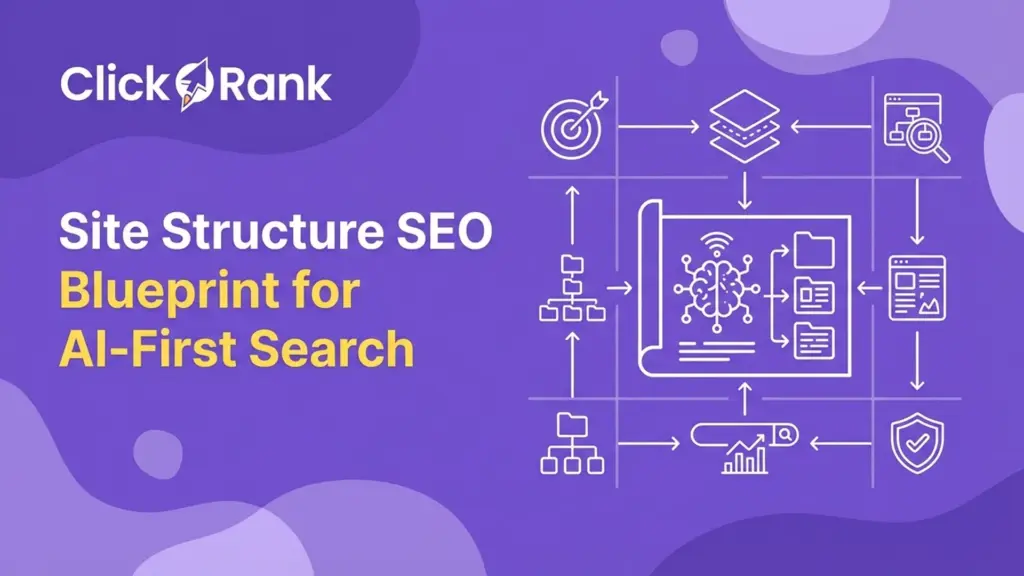
Authority flow is the way internal link equity (or “link juice”) moves through your website from your strongest pages to your most important ones. Using a Hybrid-Silo model allows you to funnel the power of your homepage and high-traffic blog posts directly into your “Money Pages” (service or product pages).
In a Hybrid-Silo setup, you group related content into “clusters” but allow for flexible internal linking between relevant topics. This helps in authority building because it keeps users and crawlers engaged with your most valuable content. For example, if you have a high-authority blog post about “SEO Audits,” you should link it directly to your “SEO Services” page. This tells search engines that the service page is the ultimate destination for that topic. By managing how link equity flows, you ensure that your most profitable pages benefit from the reputation earned by your educational content.
Authority Building for AI Overviews (AIO)
AI Overviews (AIO) are the summarized answers that appear at the very top of search results, generated by models like Gemini or GPT. In 2026, authority building focuses on winning these spots because they capture the majority of user attention and clicks.
To appear in an AIO, your content must be easy for an AI to parse and summarize. This means using clear headings, direct language, and a logical structure. AI bots look for the most authoritative “nugget” of information to display as the definitive answer. If your site provides the clearest, most accurate summary of a complex topic, the AI will cite you as the primary source. This not only drives traffic but also cements your brand’s reputation as the ultimate “Source of Truth” in your industry.
The Citation Strategy
A citation strategy involves formatting your content specifically so AI bots can easily “clip” your information for their answers. Using Definition Boxes at the start of articles and structured lists for processes makes your site the most attractive option for an AI citation.
When an AI searches for a “how-to” or a definition, it looks for text that is already organized. To master this part of authority building, you should place a 40–60 word summary of your main topic in a dedicated box near the top of your page. Following this with a numbered list of steps or a bulleted list of features gives the AI exactly what it needs to build a response. By doing the work for the AI, you increase the likelihood that your brand name and link will be the one displayed to the user as the expert reference.
Optimizing for RAG (Retrieval-Augmented Generation)
Retrieval-Augmented Generation (RAG) is the technical process AI models use to pull “live” data from the web to make their answers more accurate. Optimizing for RAG means ensuring your data is structured, updated, and easy for an AI to ingest instantly.
In the world of authority building, being “RAG-ready” involves using clear tables, clean HTML, and consistent data points. If you are a financial site, for example, your interest rates should be in a clearly labeled table rather than hidden inside a long paragraph. This allows the AI to “retrieve” the specific fact it needs without getting confused by surrounding text. The more “ingestible” your data is, the more often AI models will rely on your website as their real-time data provider, significantly boosting your entity trust.
Monitoring Share of Voice (SOV)
Share of Voice (SOV) in 2026 refers to the percentage of time your brand is mentioned or cited in AI-generated answers compared to your competitors. Tracking this metric is essential for authority building because it tells you if your SEO strategy is actually working in the AI era.
Traditional rank tracking is no longer enough; you need to know if you are the “voice” the AI chooses. There are now specialized SEO tools that scan AI Overviews for specific keywords to see which brands are being recommended. If your SOV is low, it’s a sign that your content might be too generic or your technical signals are weak. By monitoring how often you are cited, you can adjust your content strategy to fill gaps where competitors might be outperforming you in the eyes of the AI.
Measuring Authority: KPIs for 2026
Measuring authority involves tracking specific metrics that prove your brand is a trusted leader in your industry. In 2026, standard rankings aren’t enough; you need to look at “brand signals” that show how both users and search engines perceive your reputation.
To succeed in authority building, you must move beyond just counting backlinks. High authority means your brand is recognized as a “household name” within your niche. This is measured by how often people seek you out directly and how much other experts rely on your data. By focusing on these KPIs, you can see if your content is actually building a long-term asset or if you are just getting temporary traffic. These metrics provide a clear picture of your “Entity Strength” and help you decide where to invest your SEO budget for the best results.
Branded Search Volume
Branded search volume is the number of times people search for your specific brand name combined with a topic, such as “ClickRank SEO audit.” This is the “ultimate authority signal” because it proves that users already trust you to provide the answer before they even see the search results.
When Google sees a spike in these types of searches, it realizes that your brand is a primary “entity” for that topic. This is a massive part of authority building because it tells the AI that you are the preferred source of truth. Unlike general keywords, branded searches cannot be easily faked. They represent real human intent and demand. If your branded search volume is growing, it’s a sign that your PR, social media, and content efforts are working together to make your name synonymous with your industry.
Referral Traffic Growth
Referral traffic is the count of visitors who arrive at your website by clicking a link on another site. Measuring this is the best way to check the quality of your backlinks, as a “good” link should actually send real human beings to your pages.
In 2026, search engines can tell the difference between a “dead” link on a low-quality site and a “live” link on a popular blog. If your authority building strategy is working, you will see a steady increase in referral traffic from trusted industry sites. This shows that your content is being placed where your target audience actually hangs out. A link that sends 100 engaged visitors is worth more for your reputation than 1,000 links from abandoned websites that no one ever visits.
Trust Flow & Citation Flow
Trust Flow and Citation Flow are metrics used to audit the “purity” of your link profile, helping you understand the quality and quantity of the sites linking to you. Trust Flow measures how close you are to known, high-quality “seed” sites, while Citation Flow measures the raw power of your link volume.
For effective authority building, you want these two numbers to be balanced. If your Citation Flow is much higher than your Trust Flow, it suggests your site has many links, but they might be from low-quality or “spammy” sources. A healthy, authoritative site usually has a high Trust Flow, meaning it is linked to by other respectable entities. Regularly auditing these numbers ensures that your “link moat” remains clean and that search engines continue to view your brand as a safe and reliable recommendation for their users.
Common Pitfalls: Why Authority Campaigns Fail
Authority campaigns fail when they prioritize shortcuts and quantity over real-world credibility and user value. In 2026, search engines are highly sophisticated at detecting “fake” authority, and one wrong move can lead to a total loss of visibility in AI-generated answers.
True authority building is a marathon, not a sprint. Many brands fail because they try to “game the system” by buying links or using AI to churn out thousands of low-quality pages. When the algorithm realizes that the brand isn’t actually trusted by real humans or other experts, it quickly demotes the site. To avoid these traps, you must stay focused on being genuinely helpful and maintaining a clean, transparent digital footprint that stands up to both manual and algorithmic reviews.
The “Guest Post Farm” Trap
Guest post farms are websites that exist solely to sell links and publish low-quality content on every topic imaginable. In 2026, these sites are a primary target for Google’s “Spam Brain” AI, which can now identify and penalize sites that participate in these paid link schemes.
Relying on these farms is a major risk for authority building. Because these sites have no topical focus and link out to anyone who pays, they carry zero “Trust Flow.” When your site is associated with these neighborhoods, search engines view your brand as a “spammer” rather than an expert. Instead of buying 50 cheap links from random blogs, you are far better off earning one high-quality mention from a legitimate industry publication. This “purity” in your link profile is what protects you from sudden ranking drops during core updates.
Ignoring Local Authority
Local authority is the specialized trust a brand earns within a specific geographic area or community. Many global brands lose traffic because they assume their general reputation will automatically help them win in geo-specific searches, but Google often prefers “local heroes” for those queries.
If a user searches for “best architect,” search engines will prioritize firms with a strong local presence, local reviews, and links from local news outlets. For authority building, this means you shouldn’t ignore your own backyard. Even if you operate globally, having a verified Google Business Profile and local citations proves you are a “real” entity with a physical footprint. Ignoring these local signals makes your brand look like a “ghost entity” that lacks the tangible trust required to rank for high-intent, location-based searches.
Content Decay
Content decay is the process where your information becomes outdated, inaccurate, or irrelevant as time passes. In the eyes of an AI search engine, hosting “stale” content is a sign that you are no longer a current expert, which quickly erodes your “Expertise” signal.
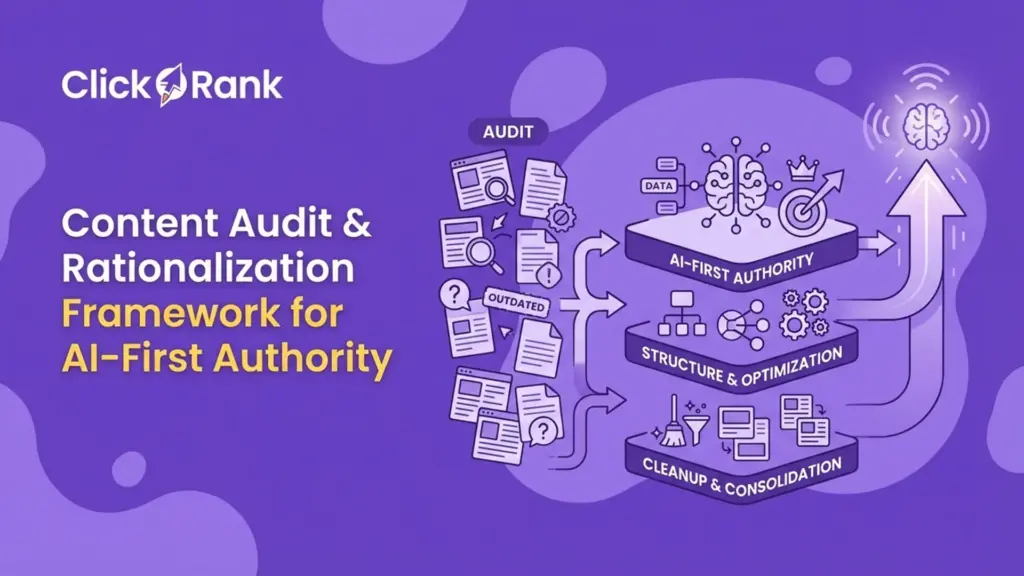
In fast-moving industries, a post from two years ago might as well be twenty years old. To maintain authority building momentum, you must have a regular “content audit” schedule to update old facts, refresh statistics, and replace dead links. If an AI model retrieves outdated information from your site and realizes it is wrong, it will stop citing you as a “Source of Truth.” Keeping your content fresh proves to both users and algorithms that you are still an active, reliable leader in your field who pays attention to the details.
Authority is a Compound Interest Game
Compound interest in SEO refers to the way small, consistent gains in trust and reputation build upon each other to create massive long-term growth. In 2026, authority building is not an overnight success story; it is a cumulative process where every high-quality mention and expert insight makes the next one easier to achieve.
When you first start, earning a single high-tier backlink or an AI citation is difficult. However, as your “entity trust” grows, search engines begin to give you the benefit of the doubt. This means your new content ranks faster, and industry peers are more likely to reference your work. Over time, the momentum of your established reputation does the heavy lifting for you. By treating authority as a long-term investment rather than a one-time expense, you create a sustainable lead that competitors cannot simply “buy” their way past.
The 12-Month Authority Roadmap
A 12-month authority roadmap is a strategic schedule that shifts your focus from technical foundations to industry-leading influence over the course of a year. To succeed in authority building, you must follow a logical progression that proves your expertise to search engines in stages.
- Months 1–3 (The Foundation): Focus on technical SEO, implementing Person and Organization Schema, and cleaning up your site structure.
- Months 4–6 (Topical Coverage): Build out your topical map. Write “pillar” and “cluster” content to cover every sub-entity in your niche.
- Months 7–9 (Asset Creation): Launch original research, proprietary data reports, and “snippet-ready” visuals to attract high-quality backlinks.
- Months 10–12 (Digital PR & Expansion): Shift toward guesting on podcasts, seeking mentions in major news outlets, and dominating community discussions.
Following this roadmap ensures you don’t skip the “trust” phase before trying to win the “popularity” phase.
Final Word: Why Consistency and “Human-First” Value are Key
Human-first value is the practice of creating content that prioritizes the needs, emotions, and problems of a real person over the requirements of a search engine. In 2026, this is the only sustainable way to engage in authority building because AI models are now trained specifically to reward content that provides a “helpful human” perspective.
Consistency is your greatest weapon. If you only provide expert value once every few months, search engines will struggle to categorize you as a definitive authority. However, by consistently showing up with unique insights and reliable data, you train the AI models to expect quality from your brand. Ultimately, authority isn’t something you “do” to a search engine—it is something you earn from your audience. When people trust you, the algorithms will naturally follow.
What is authority building in SEO?
Authority building is the process of increasing a website’s credibility and trust signals in the eyes of search engines. In 2026, this involves earning high-quality backlinks, building Topical Authority through comprehensive content, and reinforcing E-E-A-T signals within Google’s Knowledge Graph.
How do you build topical authority?
Warning: Undefined array key "answer" in /home/clickrank/htdocs/www.clickrank.ai/wp-content/plugins/structured-content/templates/shortcodes/multi-faq.php on line 20
Deprecated: str_contains(): Passing null to parameter #1 ($haystack) of type string is deprecated in /home/clickrank/htdocs/www.clickrank.ai/wp-includes/shortcodes.php on line 246
Deprecated: htmlspecialchars_decode(): Passing null to parameter #1 ($string) of type string is deprecated in /home/clickrank/htdocs/www.clickrank.ai/wp-content/plugins/structured-content/templates/shortcodes/multi-faq.php on line 20
Warning: Undefined array key "question" in /home/clickrank/htdocs/www.clickrank.ai/wp-content/plugins/structured-content/templates/shortcodes/multi-faq.php on line 5
Warning: Undefined array key "answer" in /home/clickrank/htdocs/www.clickrank.ai/wp-content/plugins/structured-content/templates/shortcodes/multi-faq.php on line 20
Deprecated: str_contains(): Passing null to parameter #1 ($haystack) of type string is deprecated in /home/clickrank/htdocs/www.clickrank.ai/wp-includes/shortcodes.php on line 246
Deprecated: htmlspecialchars_decode(): Passing null to parameter #1 ($string) of type string is deprecated in /home/clickrank/htdocs/www.clickrank.ai/wp-content/plugins/structured-content/templates/shortcodes/multi-faq.php on line 20
How does original research help with link building?
Original research provides Information Gain, offering unique data that journalists and other bloggers want to cite. In 2026, creating proprietary studies is one of the fastest ways to earn high-DR backlinks naturally because it positions your website as the primary source of information.
What are the best authority building tools?
Top tools include Ahrefs and Semrush for backlink analysis, Majestic for Trust Flow metrics, and Google Search Console for tracking branded search growth. Tools like SparkToro also help identify where your audience spends time online for Digital PR campaigns.
Does social media affect authority building?
While social media links are usually no-follow, social platforms help build brand salience and increase branded search demand. High engagement across social networks sends brand signals to search engines, confirming that your entity is recognized and trusted by real audiences.
Warning: Undefined array key "question" in /home/clickrank/htdocs/www.clickrank.ai/wp-content/plugins/structured-content/templates/shortcodes/multi-faq.php on line 5
Entity SEO focuses on optimizing your brand as a recognizable entity rather than only targeting keywords. By implementing structured data and connecting your brand to trusted nodes such as Wikipedia and Wikidata, you help search engines understand your brand’s relationships with authoritative topics and entities.
Is guest posting still effective for authority?
Guest posting remains effective when it is done on highly relevant and authoritative websites within your niche. However, modern spam detection systems like Google’s SpamBrain can easily identify low-quality guest post networks. For sustainable authority building, focus on expert contributions and editorial collaborations rather than mass paid placements.