Future of AEO in AI-Driven Search refers to how search is shifting from ranking web pages to delivering direct, AI-generated answers across platforms like voice assistants and chat-based engines.
In 2026 and beyond, brands will win visibility not by keywords alone, but by becoming trusted sources that AI systems reference, verify, and reuse. This transition marks the decline of traditional SEO and the rise of answer-focused optimization.
Introduction The End of Traditional Search as We Know It
The Future of AEO in AI-driven Search means traditional SEO alone can no longer secure visibility because AI now delivers direct answers instead of ranked links. Users are no longer scrolling through ten blue links; they expect instant, clear responses from AI systems like chatbots, voice assistants, and AI summaries.
This shift matters because brands that fail to adapt will simply stop appearing in user journeys. In this cluster, you will learn how AEO changes search behavior, why classic SEO signals are losing power, and what businesses must do to stay visible. This topic directly supports our main guide on Answer Engine Optimization by explaining where search is heading next and how to prepare now, not later. If your strategy still depends only on rankings and traffic, this article will show why that approach is becoming risky.
Why AI-driven search is fundamentally different from classic Google SERPs
AI-driven search is different because it answers questions directly instead of showing a list of websites. In classic Google SERPs, users compared links and chose where to click. In AI-driven search, the system reads, understands, and summarizes information on the user’s behalf. This changes how visibility works.
AI models focus on clarity, confidence, and context , not just keywords. They pull information from multiple sources and present one combined answer. This means being “ranked #1” is no longer enough if your content is not easy for AI to extract and trust.
For businesses, this shift requires writing content that explains concepts clearly, uses structured data, and shows expertise. Pages built only to attract clicks struggle, while pages built to answer questions gain visibility.
How answer engines are changing user expectations forever
Answer engines are changing expectations by training users to expect instant, complete answers without extra effort. Users no longer want to research; they want solutions. When someone asks a question, they expect the answer immediately, in simple language, and often without visiting a website at all.
This behavior affects every industry. Buyers make decisions faster. Comparisons happen inside AI interfaces. Trust is formed before a website visit, not after. As a result, brands must focus on answer quality , not page views.
Best practices include:
- Writing clear, question-focused content
- Using short explanations followed by depth
- Matching conversational search queries
If your content cannot satisfy users in one response, AI will choose a different source.
Why businesses that ignore AEO risk losing visibility entirely
Ignoring AEO means your content may exist online but never be seen by users who rely on AI answers. When AI cannot confidently extract or verify your information, it simply skips you. This creates a silent loss of visibility that traditional analytics often fail to show.
Volution of Search Engines into Answer Engines
The Future of AEO in AI-driven Search is defined by search engines evolving into systems that generate answers, not lists of links. This shift is happening because users want speed, clarity, and confidence, not options. Traditional search engines focused on indexing and ranking pages. Modern answer engines focus on understanding questions, validating information, and delivering a single, helpful response.
This evolution forces brands to rethink visibility. Success is no longer about “where you rank,” but whether AI trusts and references you . Content must now be structured for understanding, not crawling. This is why AEO is becoming a core growth strategy instead of an optional add-on to SEO.
How Google SGE, ChatGPT, and Perplexity are redefining search behavior
Google SGE, ChatGPT, and Perplexity are redefining search by synthesizing answers instead of directing users to websites. These systems read multiple sources, compare information, and present one combined response. Users no longer need to click through five articles to learn something.
This changes behavior in three major ways:
- Users ask longer, more natural questions
- Decisions happen inside the AI interface
- Brands gain or lose visibility instantly
AI-driven platforms reward content that is clear, factual, and well-structured . Pages designed only for ranking signals struggle. Pages designed to explain and educate win. This is why future AEO strategies must focus on becoming a reliable reference, not just a high-ranking page.
Why links are becoming secondary to synthesized answers
Links are becoming secondary because AI uses them as sources, not destinations. In traditional SEO, links drove traffic and authority. In AI search, links act as supporting evidence behind the answer. The user may never see them.
This doesn’t mean links are useless, but their role has changed. AI prioritizes:
- Content clarity
- Consistent facts across sources
- Strong entity signals
If your page is referenced but not clicked, you still gain brand authority and influence decisions. This is a mindset shift many marketers struggle with. In the future of AEO, being cited matters more than being visited .
How AI decides which brand becomes the “source of truth”
AI selects a “source of truth” by comparing consistency, expertise, and trust signals across the web. Brands that publish clear explanations, show real experience, and use structured data are more likely to be chosen. Conflicting or vague content is ignored, even if it ranks well in classic search.
From Rankings to Recognition
The future of AEO in AI-driven search shifts success from rankings to recognition as a trusted source. Traditional SEO rewarded pages that ranked high for keywords. AI-driven search rewards brands that are repeatedly referenced across answers. This means visibility now depends on who AI recognizes, not who appears first on a results page.
When AI generates an answer, it selects information from sources it already trusts. If your brand is not recognized as reliable, you will not appear even if your page is well-optimized for keywords. This change forces businesses to focus on authority, consistency, and clarity. The goal is no longer traffic alone, but becoming part of the AI’s knowledge layer .
Common AEO Mistakes to Avoid
- Focusing only on rankings while ignoring AI answer visibility.
- Using keyword stuffing instead of clear, factual explanations.
- Publishing content without structured data or entity consistency.
- Measuring success only through clicks in a zero-click AI world.
Why future search success is about being referenced, not ranked
Future search success depends on being referenced because AI answers often remove the need for clicking. When users get what they need instantly, rankings lose their value. AI systems cite brands internally when forming answers, even if those brands never receive a visit.
To increase references, brands must:
- Publish clear, factual answers to common questions
- Maintain consistent messaging across platforms
- Build entity-level authority, not just page-level SEO
This approach aligns with answer engines, which value reliability over optimization tricks. Being referenced repeatedly builds long-term visibility that rankings alone can no longer guarantee.
How AI answer engines reward authority over optimization tricks
AI answer engines reward authority by prioritizing expertise, accuracy, and real-world experience. Keyword stuffing, backlink manipulation, and thin content may still rank temporarily, but they fail in AI-driven systems.
AI evaluates:
- Depth of explanation
- Accuracy across multiple sources
- Signs of experience and credibility
Brands that publish original insights, explain topics simply, and update content regularly gain stronger AI trust. In the future of AEO, authority is built by teaching, not gaming algorithms. This makes AEO more stable and long-lasting than traditional SEO tactics.
What “answer ownership” means for brands in AI search
Answer ownership means your brand becomes the default reference AI uses when a topic is mentioned. Instead of competing for clicks, you compete to own the answer. Once established, this creates compounding visibility across AI platforms.
Entity-Based Search Will Replace Keyword SEO
Entity-based search will replace keyword SEO because AI understands real-world concepts better than repeated words. In AI-driven search, systems no longer match pages to keywords alone. Instead, they identify entities people, brands, products, and topics and understand how they relate to each other. This is a major shift in the future of AEO in AI-driven search.
Keywords still matter, but they are signals, not the foundation. AI focuses on meaning, context, and relationships. Brands that structure content around clear topics and real expertise gain stronger visibility than those relying on keyword repetition. To succeed, businesses must move from keyword targeting to entity positioning , where AI recognizes who you are and what you are known for.
Why AI models understand entities better than keywords
AI models understand entities better than keywords because entities represent meaning, not just text. A keyword can have many meanings, but an entity has a defined identity. AI systems use entities to reduce confusion and improve accuracy.
For example, instead of matching the phrase “best AEO tools,” AI identifies tools, companies, and features as connected concepts. This allows it to answer complex questions more reliably.
Best practices for entity-focused content include:
- Explaining topics clearly and fully
- Using consistent terminology across pages
- Connecting related concepts naturally
When AI understands your brand as an entity, it can confidently reference you across multiple answers.
How knowledge graphs will dominate future answer generation
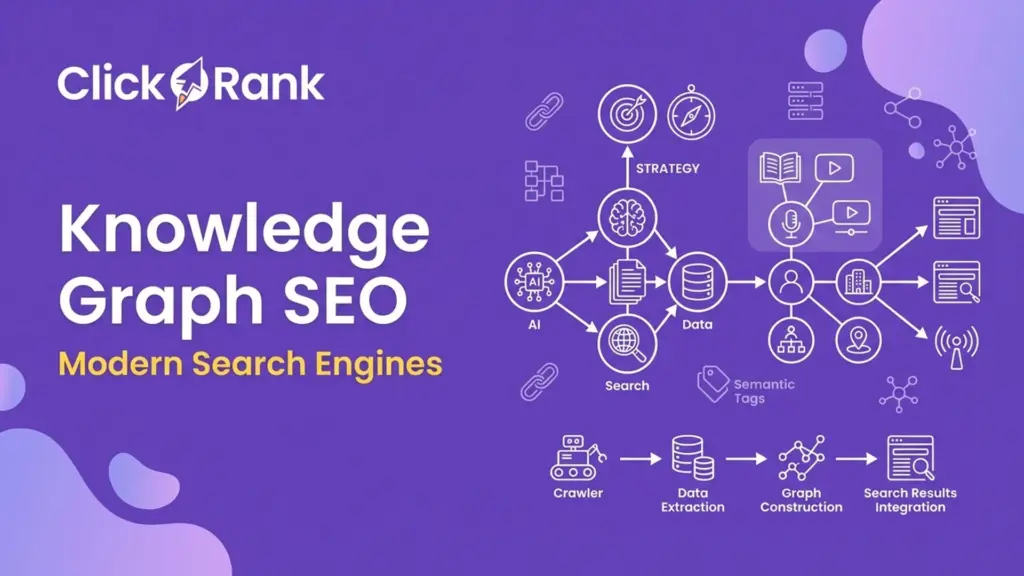
Knowledge graphs will dominate answer generation by organizing entities and their relationships in a structured way. AI relies on these graphs to understand how concepts connect, who is authoritative, and what information is reliable.
Knowledge graphs pull data from websites, structured markup, trusted sources, and consistent mentions. If your content feeds clear signals into this system, AI can reuse your information at scale.
This means brands must focus on:
- Consistent brand information
- Clear topic ownership
- Structured data where applicable
In the future of AEO, visibility depends on how well your content fits into AI’s knowledge graph, not just how well it ranks.
How brands can position themselves as primary entities
Brands can position themselves as primary entities by publishing authoritative content, maintaining consistency across platforms, and using structured data correctly. Over time, this helps AI associate your brand with specific topics, increasing long-term answer visibility.
The Rise of Zero-Click & No-Website Answers
Zero-click and no-website answers are rising because AI often solves the user’s problem without sending them anywhere. In AI-driven search, the answer itself becomes the destination. Users ask a question, get a complete response, and move on. This trend is accelerating in the future of AEO in AI-driven search, especially in informational, comparison, and decision-based queries.
For businesses, this shift feels uncomfortable because traffic drops even when visibility increases. However, visibility without clicks still shapes buying decisions. If AI repeatedly mentions your brand as a solution, users remember it even if they never visit your site. The real challenge is learning how to measure value beyond page views.
Why many AI answers will not send traffic at all
Many AI answers will not send traffic because the user’s intent is satisfied instantly. AI is designed to reduce friction, not create it. If a question can be answered in one response, there is no reason to click.
This is common for:
- Definitions and explanations
- Product comparisons
- How-to guidance
Instead of fighting this trend, brands must adapt. The goal becomes being present inside the answer. AI visibility builds awareness, authority, and trust even without a click. Businesses that rely only on traffic metrics risk underestimating their real impact in AI search environments.
How visibility without clicks still drives business value
Visibility without clicks still drives value by influencing decisions before the customer takes action. When users see the same brand repeatedly referenced by AI, trust builds passively. By the time they are ready to buy, your brand already feels familiar and credible.
This type of visibility supports:
- Brand recall
- Shorter sales cycles
- Higher conversion confidence
To benefit, content must clearly explain value, expertise, and solutions within the AI answer itself. In the future of AEO, impression-level influence matters more than raw traffic numbers .
How marketers should redefine success metrics in an AEO world
Marketers must shift from traffic-focused KPIs to visibility and influence metrics. Answer impressions, brand mentions, and AI citations become stronger indicators of success than clicks alone.
Voice, Multimodal & Conversational AI Search
Voice, multimodal, and conversational AI search are reshaping discovery by making interaction more natural and continuous. Users are no longer typing short keywords. They are speaking full questions, uploading images, and continuing conversations across devices. In the future of AEO in AI-driven search, this shift forces brands to optimize for how people talk and think, not how they type.
AI systems now combine text, voice, images, and context to deliver better answers. This means content must be easy to understand, flexible across formats, and consistent in meaning. Brands that fail to adapt will struggle to appear in voice answers, visual searches, and conversational follow-ups.
How voice assistants will become primary answer interfaces
Voice assistants will become primary interfaces because they deliver fast, hands-free answers in real-life moments. Users ask questions while driving, cooking, or multitasking, and they expect one clear response.
Voice search favors:
- Short, direct answers
- Natural language phrasing
- High-confidence sources
This makes AEO critical. Voice assistants usually return only one answer, not options. If your content is not structured clearly, it will never be spoken. Brands must create concise explanations, FAQ-style content, and strong entity signals to win voice visibility in AI-driven environments.
Why multimodal AI (text, image, video, audio) will reshape AEO
Multimodal AI will reshape AEO by blending text, images, video, and audio into a single answer experience. Users might upload a photo, ask a question, and receive a mixed response using visuals and text together.
To adapt, brands should:
- Add descriptive image alt text
- Use structured data for media
- Explain concepts visually and verbally
AI selects content that works across formats. If your explanation only works as text, you lose reach. In the future of AEO, visibility depends on how well your content performs in multiple formats at once.
How conversational context will replace single-query optimization
Conversational context allows AI to remember previous questions and refine answers. This reduces the value of single-keyword optimization and increases the importance of topic depth, consistency, and clear explanations across related content.
Trust, Accuracy & E-E-A-T as Core Ranking Signals
Trust, accuracy, and E-E-A-T are core signals because AI cannot afford to give wrong answers. In AI-driven search, a single incorrect response damages user trust instantly. That’s why answer engines now prioritize sources that show real experience, clear expertise, strong authority, and long-term trustworthiness.
In the future of AEO in AI-driven search, popularity alone is not enough. Viral content, aggressive link-building, or surface-level articles may get attention, but they do not earn AI trust. AI systems cross-check information, compare sources, and down-rank content that feels risky or unreliable. This shift rewards brands that invest in accuracy, transparency, and real knowledge.
Why AI engines prioritize trusted sources over popular ones
AI engines prioritize trusted sources because accuracy matters more than engagement. Popular content can be wrong, biased, or incomplete. AI systems are designed to reduce risk, not maximize clicks.
Trusted sources usually share these traits:
- Clear authorship and expertise
- Consistent, fact-based explanations
- Alignment with other reliable sources
When AI selects an answer, it favors content that agrees with verified information elsewhere. Even if a page has fewer backlinks or less traffic, it can still win if it is more accurate. This makes trust a competitive advantage in AEO.
How misinformation risks are shaping answer selection models
Misinformation risks are shaping AI models to be more cautious and selective. AI engines now filter out content that exaggerates, lacks sources, or contradicts known facts.
To reduce risk, AI prefers:
- Neutral, educational language
- Clear explanations without hype
- Updated and well-maintained content
This means sensational headlines or exaggerated claims can hurt visibility. In the future of AEO, calm, accurate, and well-explained content performs better than attention-grabbing tactics.
Why experience and expertise will outweigh backlinks
Backlinks still matter, but they no longer guarantee trust. AI values firsthand experience, clear explanations, and subject expertise more than link volume. Brands that demonstrate real knowledge consistently will outperform those relying only on external signals.
Structured Data as the Language of AI Search
Structured data is the language of AI search because it tells machines exactly what your content means. In AI-driven search, engines do not guess intent; they rely on clear signals. Structured data helps AI understand topics, entities, relationships, and facts without ambiguity. This makes it essential in the future of AEO in AI-driven search.
Without structured data, even high-quality content can be ignored because AI cannot confidently extract or verify it. With proper markup, your content becomes easier to read, trust, and reuse across answers, voice responses, and AI summaries.
Why schema markup will become mandatory, not optional
Schema markup will become mandatory because AI needs clarity at scale. As AI systems process billions of pages, they rely on structured formats to quickly identify meaning.
Schema helps AI:
- Understand what a page is about
- Identify key facts and entities
- Reduce misinterpretation
In the future of AEO, pages without schema will struggle to compete. Brands that adopt schema early gain a visibility advantage, while others risk being skipped entirely in answer generation.
How structured data enables AI to extract, verify, and reuse answers
Structured data enables AI to extract, verify, and reuse answers by turning content into machine-readable knowledge. AI can compare structured facts across sources to confirm accuracy before presenting an answer.
Best practices include:
- Marking up FAQs, how-tos, and entities
- Keeping schema consistent and updated
- Avoiding excessive or incorrect markup
This allows your content to be reused across multiple AI platforms, increasing long-term visibility without extra effort.
How future schema types may evolve specifically for AEO
Future schema types may focus on intent, confidence levels, and real-world experience. These new formats will help AI judge not just what is true, but what is reliable enough to answer user questions.
Automation, AI Monitoring & Real-Time Optimization
Automation and real-time monitoring are essential because AI-driven search changes faster than manual SEO cycles can handle. In the future of AEO in AI-driven search, content visibility can rise or disappear overnight based on how AI systems interpret and reuse information. Monthly or quarterly audits are no longer enough.
AI search environments require continuous tracking of answers, citations, and visibility signals. Automation helps brands detect when their content is being referenced, misinterpreted, or replaced by competitors. This shift turns optimization into an ongoing process instead of a one-time task.
How AI will optimize content for other AI systems
AI will optimize content for other AI systems by analyzing patterns that humans miss. Instead of guessing what works, AI tools can test phrasing, structure, and clarity at scale.
AI-driven optimization focuses on:
- Improving answer clarity
- Reducing ambiguity
- Aligning content with user intent
This allows brands to refine content faster and stay aligned with evolving answer engine behavior. In the future of AEO, AI-assisted optimization becomes a competitive advantage, not a shortcut.
Why continuous AEO monitoring will replace periodic SEO audits
Continuous AEO monitoring replaces periodic audits because AI visibility is dynamic, not static. AI answers change based on new data, sources, and context.
Key signals to monitor include:
- Answer impressions
- Brand mentions in AI responses
- Changes in cited sources
Waiting months to review performance means missing critical visibility shifts. Real-time monitoring helps brands react quickly, protect answer ownership, and maintain trust with AI systems.
How platforms like ClickRank fit into the future AEO workflow
Platforms like ClickRank support AEO by automating visibility tracking, content optimization, and answer-focused insights. Instead of manual audits, teams get continuous signals that help them stay competitive in AI-driven search environments.
Impact of AEO on SEO Roles & the Industry
The impact of AEO on SEO roles is a shift from ranking-focused work to AI visibility strategy. In the future of AEO in AI-driven search, SEO professionals are no longer just optimizing pages for algorithms; they are shaping how AI systems understand, trust, and reuse information. This change affects agencies, in-house teams, and freelancers alike.
Classic tasks like keyword placement and backlink counting still exist, but they are no longer enough. The industry is moving toward roles that blend SEO, content strategy, data analysis, and AI understanding. Those who adapt will grow in value. Those who don’t risk becoming irrelevant as search behavior continues to evolve.
How SEO roles will evolve into AI visibility strategists
SEO roles will evolve into AI visibility strategists because rankings alone no longer define success. Professionals must now ensure that brands appear inside AI answers, voice results, and synthesized summaries.
This new role focuses on:
- Answer-focused content planning
- Entity positioning and trust signals
- Monitoring AI citations and mentions
Instead of asking “What do we rank for?”, teams ask “Where are we being referenced?” This mindset shift defines the next generation of search professionals in the future of AEO.
Why content writers must think like knowledge engineers
Content writers must think like knowledge engineers because AI consumes content differently than humans. AI looks for structure, clarity, and consistency before creativity.
Writers now need to:
- Answer questions directly
- Organize content logically
- Avoid vague or filler language
This does not remove creativity, but it changes priorities. Writing that teaches clearly performs better than writing designed only to attract clicks. In AI-driven search, content quality is measured by understanding, not engagement tricks.
What skills will matter most for SEO professionals in 2026+
Critical skills include understanding AI behavior, structured data basics, entity-based thinking, and answer-focused writing. Professionals who combine strategy, clarity, and technical awareness will lead the industry forward.
Preparing for the Next Phase of AI Search
Preparing for the next phase of AI search means transitioning from traffic-driven SEO to visibility-driven AEO. Businesses that wait for AI search to “stabilize” will fall behind. The future of AEO in AI-driven search favors early adopters who adjust content, structure, and measurement systems now.
This transition does not require abandoning SEO overnight. Instead, it means layering AEO practices on top of existing SEO foundations. Brands that start early build stronger AI trust, clearer entity signals, and long-term answer ownership.
Pro Tips for Winning the Future of AEO
- Rewrite important pages using answer-first formatting.
- Track AI mentions and citations, not just traffic and rankings.
- Strengthen your brand as an entity, not just a website.
- Use structured data consistently to help AI extract and verify answers.
How businesses can start transitioning from SEO to AEO today
Businesses can start transitioning by shifting content from keyword targeting to answer clarity. The first step is auditing existing content to see whether it directly answers real user questions.
Actionable steps include:
- Rewrite key pages with answer-first formatting
- Add structured data to priority content
- Focus on entity-level authority, not single pages
These changes help AI understand and reuse your content across platforms. Small updates today compound into major visibility gains in the future of AEO.
Why hybrid SEO + AEO strategies will dominate the next decade
Hybrid SEO + AEO strategies will dominate because traditional search is not disappearing completely. Users will still click links for deep research, but AI answers will guide discovery and decisions.
A hybrid approach ensures:
- Traffic from classic search
- Visibility inside AI answers
- Strong brand recognition across platforms
Brands that balance both will stay resilient as search behavior continues to evolve.
How early AEO adoption creates long-term competitive moats
Early AEO adoption builds AI trust before competitors catch up. Once AI consistently references a brand, that position becomes hard to replace, creating a durable advantage in AI-driven search ecosystems.
Final Takeaway – AEO Is Not the Future, It Is the Present
AEO is already shaping how users discover information, not something to plan for later. Waiting for AI search to mature is a strategic mistake. By the time it feels “safe,” competitors will already own the answers.
Brands that answer clearly, structure content for AI, and build trust now will dominate visibility across AI platforms. This is not a temporary trend it is the new foundation of search.
- AEO is already active in AI-driven search, not a future concept.
- Visibility now depends on being referenced by AI, not ranked.
- Entity authority, trust, and structured data drive long-term AI visibility.
- Brands that adapt early build answer ownership that compounds over time.
Why waiting for AI search “to mature” is a strategic mistake
Waiting is a mistake because AI systems are learning right now. They are deciding which brands to trust and reuse. If you are absent today, catching up later becomes much harder.
How brands that answer first will win mindshare permanently
Brands that answer first win because repetition builds authority. When users see the same brand referenced again and again, trust forms naturally. Over time, that trust turns into preference, loyalty, and long-term growth.
Winning in the future of AEO in AI-driven search starts with clarity, structure, and continuous optimization. You’ve learned why rankings are fading, how AI selects answers, and what actions create lasting visibility. Now it’s time to apply it.
To streamline your next steps, use ClickRank’s Meta Description Generator to create AI-friendly, clear summaries that improve answer extraction and visibility.
👉 Streamline your Free site audit . Professional SEO Audit Tool. Try it now!
What is the Future of AEO in AI-driven Search?
The Future of AEO in AI-driven Search is a shift where search engines deliver direct answers instead of ranked links. AI systems prioritize trusted, clear, and structured content, making answer visibility more important than traditional keyword rankings or traffic.
How is AEO different from traditional SEO in the future?
AEO differs from traditional SEO because it focuses on being referenced inside AI answers, not ranking pages. While SEO optimizes for clicks, AEO optimizes for clarity, trust, and answer extraction so AI systems can reuse your content directly.
Will SEO become obsolete because of AEO?
SEO will not become obsolete, but its role will change. Traditional SEO supports discoverability, while AEO ensures visibility inside AI answers. The future belongs to hybrid strategies that combine SEO foundations with answer-focused optimization.
Why is structured data important for the future of AEO?
Structured data is important because it helps AI understand and verify content accurately. In AI-driven search, schema markup allows systems to extract facts confidently, increasing the chances of your content being selected and reused in answers.
How do brands gain visibility in zero-click AI search results?
Brands gain visibility in zero-click results by becoming trusted answer sources. Clear explanations, entity consistency, and authoritative content allow AI to reference your brand repeatedly, even when users never click through to a website.
What skills will matter most for AEO in 2026 and beyond?
Key AEO skills include answer-first writing, entity-based thinking, structured data basics, and AI visibility monitoring. Professionals who focus on clarity, trust, and AI behavior will outperform those relying only on classic SEO tactics.
When should businesses start preparing for the future of AEO?
Businesses should start preparing now because AI systems are already deciding which sources to trust. Early AEO adoption builds long-term answer ownership, while delayed action makes it harder to gain visibility later.