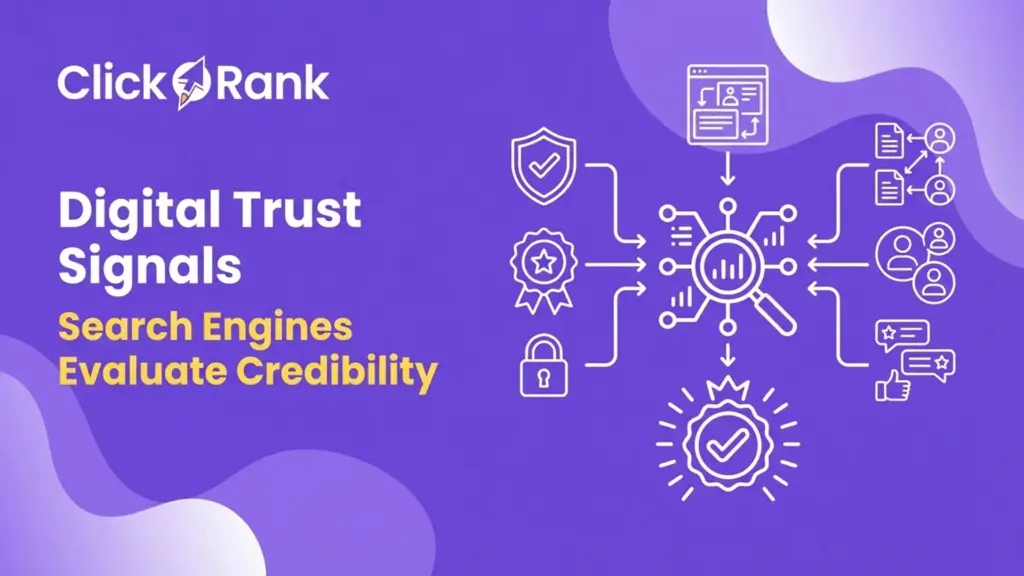
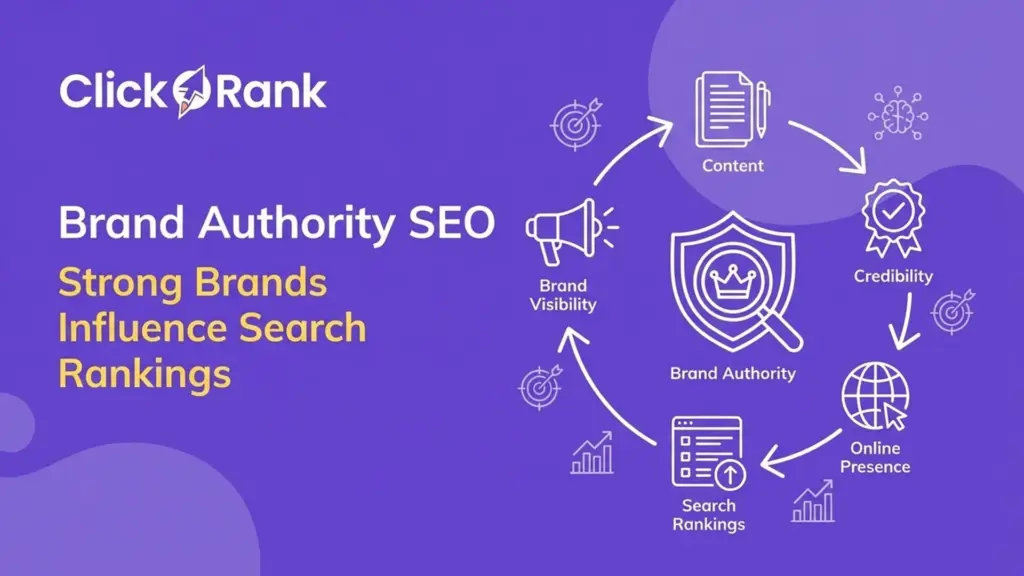
Search engines once relied heavily on backlinks to measure authority. Today, ranking systems evaluate a broader set of signals, including brand mentions, entity recognition, contextual references, and reputation across the web.
These signals known as linkless authority signals allow search engines like Google Search to measure credibility even when no hyperlink exists.
Understanding how these signals work is essential for modern SEO because search algorithms increasingly rely on entity relationships stored in the Knowledge Graph.
Understanding Linkless Authority Signals
Linkless authority signals are digital breadcrumbs that tell search engines your brand is a trusted leader without needing a direct clickable link. While traditional SEO focuses on getting other sites to link to yours, these signals prove that people are talking about you, searching for you, and recognizing your expertise across the web.
What Are Linkless Authority Signals?
Linkless authority signals are references to a brand, entity, or website across the internet that contribute to search engine trust and rankings even when those references do not include hyperlinks.
In the past, search engines like Google relied almost entirely on Link Building to determine which sites were important. Today, algorithms are much smarter. They can “read” the web to see when your brand name is mentioned on a news site, a forum, or social media. Even if there is no blue underlined link, Google recognizes that mention as a “vote” for your credibility. It’s like being famous in real life people know who you are because everyone is talking about you, not just because you have a business card in their pocket.
Key Types of Linkless Signals
Linkless authority signals come in many forms, each helping to build a “reputation profile” for your business.
- Brand Mentions: This happens when a website or news outlet mentions your company name but doesn’t link back to your site.
- Unlinked Citations: Common for local businesses, these are mentions of your name, address, and phone number (NAP) on directories.
- Entity Associations: When your brand is frequently mentioned alongside specific topics or industries, search engines begin to associate you as an expert in that niche.
- Co-citation Signals: This occurs when your brand is mentioned on the same page as other high-authority brands, boosting your status by association.
- Brand Search Demand: When a high volume of users types your specific brand name into the search bar, it signals massive authority and trust.
- Media Coverage References: Being discussed in press releases or digital magazines provides a massive trust boost, even without a backlink.
Why Linkless Signals Matter for Modern SEO?
Linkless signals matter because search engines have evolved to prioritize context and reputation over simple link counts. In the early days of the web, links were the only way to measure authority, but this led to “link spam” where people bought low-quality links to trick the system.
Now, Google uses advanced AI to understand the sentiment and quality of brand mentions. If your brand is frequently discussed in a positive way on high-quality sites, it proves you are a real-world authority. This is a core part of modern Link Building strategies because it builds a natural, well-rounded presence that is harder for competitors to fake. By focusing on these signals, you ensure your rankings stay stable even as algorithms change.
The Evolution of Search Authority Signals
The way search engines judge a website has changed from simple word counting to understanding real-world reputations.
Today, Linkless Authority Signals play a massive role in how Google decides who deserves the top spot, but it took decades of trial and error to get here.
Early Search Algorithms and Keyword Matching
In the earliest days of the internet, search engines were much simpler and relied almost entirely on keyword matching. If you wanted to rank for “best coffee beans,” you simply had to repeat that phrase on your page more often than your competitors.
This era was the “Wild West” of SEO. There was no real way for a search engine to know if a website was actually a high-quality source or just a page filled with repetitive text. Because there were no sophisticated ways to measure trust, the results were often low-quality and easy to manipulate with “keyword stuffing.”
The Rise of Link-Based Ranking
The game changed when Google introduced the concept of using the web’s structure as a voting system. They realized that if a high-quality website linked to another page, it was essentially a “recommendation” or a vote of confidence.
The most famous version of this is PageRank. This algorithm treated every backlink like a digital referral. The more links a page had especially from other important pages the higher it would rank. This made Link Building the most important task for any webmaster. It was the first time search engines moved away from just looking at what was on a page to looking at what the rest of the web thought of that page.
Why Search Engines Needed Signals Beyond Links?
As links became the gold standard for ranking, people found ways to cheat. This led to widespread link manipulation, which forced search engines to look for other trust signals, like Linkless Authority Signals, to verify a site’s true value.
Several “black hat” tactics began to clutter search results with low-quality content:
- Link Farms: Groups of websites created solely to link to each other to boost rankings.
- Paid Links: Companies buying thousands of links from irrelevant sites to fake popularity.
- Private Blog Networks (PBNs): Networks of expired domains used to funnel authority to a main site.
Because these tactics were so effective, Google had to find a way to see past the links. They needed to know if a brand was actually being talked about by real people in a natural way.
The Shift Toward Entity-Based Ranking
Modern search has moved toward entity-based ranking, where Google views brands, people, and places as “entities” rather than just strings of text. This means the algorithm looks at the contextual relationships between different pieces of information.
If your brand name is mentioned frequently alongside specific industry terms on high-authority news sites, Google recognizes you as an authority in that “entity” space. This happens even without a clickable link. By analyzing how different entities relate to each other across the web, search engines can build a more accurate map of who the real experts are. This is why building a strong brand presence is now just as important as traditional technical SEO.
Entity SEO: The Foundation of Linkless Authority
In the modern digital landscape, search engines don’t just see words on a page; they see a network of real-world objects. Entity SEO is the process of defining your brand as a distinct, recognizable “thing” in the eyes of an algorithm, which is the secret sauce behind Linkless Authority Signals.
What Is an Entity in Search?
An entity is a uniquely identifiable object such as a brand, person, product, or concept.
Think of an entity as a noun that a search engine truly understands. For example, “Apple” isn’t just a five-letter word; Google knows it is a technology company based in Cupertino that makes iPhones. By establishing your business as a clear entity, you move beyond just “having a website” and become a recognized authority in your field. This allows search engines to track your reputation across the entire web, even when other sites don’t provide a direct link.
How Search Engines Recognize Entities?
Search engines use sophisticated entity recognition systems to scan the web and identify these unique objects. They look for patterns in language, such as capitalized names, specific addresses, and unique product titles.
To make this easier for them, experts often use Schema markup, which is a special code that tells a search engine exactly who you are and what you do. When your brand is mentioned on a news site alongside your CEO’s name or your specific industry, the algorithm connects these dots. It uses natural language processing (NLP) to understand the context of the mention, effectively building a profile of your brand’s expertise without needing a single backlink.
The Role of the Knowledge Graph in Authority Signals
The Knowledge Graph is Google’s massive database of billions of entities and the facts that connect them. It acts like a giant brain that maps out how different topics relate to one another.
When your brand becomes part of the Knowledge Graph, you gain a massive boost in Linkless Authority Signals. This happens because Google can now verify your existence through multiple sources. If the Knowledge Graph sees your brand mentioned in a research paper, a Wikipedia entry, and a popular industry blog, it strengthens the “nodes” connecting your brand to your niche. This interconnected web of information makes your site appear more trustworthy, which is a core goal of any modern Link Building strategy.
Entity Authority vs Domain Authority
While they sound similar, Entity Authority and Domain Authority are two very different ways of measuring success.
| Feature | Domain Authority (Traditional) | Entity Authority (Modern) |
| Primary Driver | Number and quality of backlinks. | Brand mentions, search volume, and trust. |
| Verification | Based on the URL/Domain. | Based on the Brand/Object itself. |
| Key Metric | Moz or Ahrefs scores. | Knowledge Graph presence and brand searches. |
Domain Authority is a third-party metric that guesses how well a specific URL will rank based on its link profile. Entity Authority, however, is about the real-world reputation of the brand. You could have a relatively new domain, but if your brand is a recognized entity that everyone is talking about, you can still outrank older sites. This shift proves that becoming a household name in your industry is just as valuable as technical link acquisition.
Understanding Implied Links in Search Algorithms
While traditional SEO focuses on clickable hyper-text, search engines have become experts at reading between the lines. Implied links represent a shift in how algorithms calculate power, moving from counting clicks to measuring genuine popularity.
What Are Implied Links?
An implied link is a textual reference to a brand or website that search engines may treat as an authority signal.
Think of an implied link as a digital “shout-out.” Even if a blogger doesn’t technically link to your site, simply typing your brand name or your unique product creates a connection in the eyes of a search engine. These Linkless Authority Signals act as a vote of confidence. When Google sees your brand mentioned on a high-tier site like The New York Times or Forbes, it assumes you are an authority, regardless of whether a clickable link exists.
How Implied Links Differ From Backlinks?
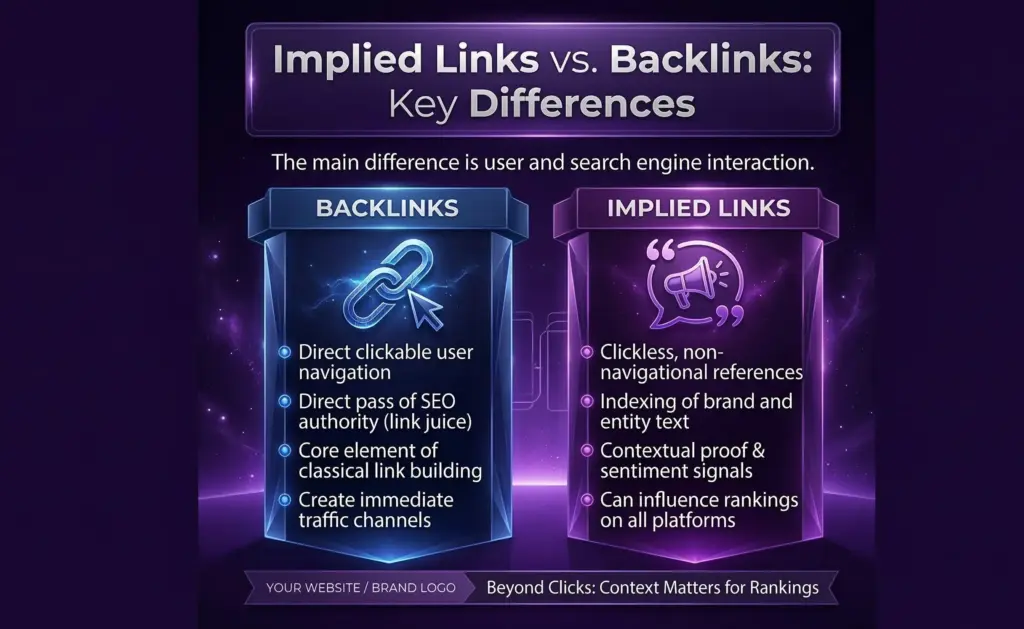
The main difference between these two signals is how a user and a search engine interacts with them.
- Backlinks: These are the traditional “blue links” you click to travel from one site to another. They pass “link juice” directly and are the foundation of classic Link Building.
- Brand Mentions: These are “linkless” references. A user cannot click them to reach your site, but search engines still index the text.
While backlinks provide a direct path for traffic, implied links provide contextual proof. If a site mentions your brand name alongside keywords like “expert” or “top-rated,” search engines use that sentiment to boost your rankings. This means you can gain authority even if a website has a strict “no-link” policy.
Why Implied Links Are Harder to Manipulate?
Search engines love implied links because they are much harder for “black hat” SEOs to fake. It is relatively easy to buy a thousand low-quality backlinks from a link farm, but it is very difficult to trick thousands of real people into talking about your brand naturally.
Implied links reflect a real-world reputation. Because they often appear in news articles, social media discussions, and forum threads, they represent organic human behavior. Search engines use these signals to double-check your backlink profile. If a site has thousands of links but nobody is actually talking about the brand name (a lack of Linkless Authority Signals), the algorithm may flag that site as suspicious. This makes linkless mentions a more honest “trust signal” for modern search.
Brand Mentions as Authority Signals
In the eyes of modern search engines, your brand name is more than just a label it is a powerful ranking signal. Even when a website doesn’t provide a clickable link, simply mentioning your company contributes to your Linkless Authority Signals. This shift has turned brand awareness into a core SEO strategy.
What Are Unlinked Brand Mentions?
An unlinked brand mention is any online reference to your company, products, or key employees that does not include a hyperlink back to your website. These mentions often appear in news articles, product reviews, forum discussions, or social media posts.
For example, if a tech blogger writes, “The new project management tools from Asana are changing the industry,” but doesn’t link to Asana’s homepage, that is an unlinked mention. While it doesn’t pass traditional “link juice” like standard Link Building does, it still tells Google that your brand is a relevant topic of conversation in your niche.
How Search Engines Detect Brand Mentions?
Search engines use a combination of contextual analysis and entity recognition to find and value these mentions. Instead of just looking for a URL, the algorithm scans the text for “Proper Nouns” that it recognizes as registered brands or established entities.
Google’s AI looks at the words surrounding your brand name to determine if the mention is positive, negative, or neutral. If your brand is mentioned on a high-authority site like Wired or TechCrunch, the algorithm associates your “entity” with the high-trust environment of those publications. This helps build a “reputation score” that influences your rankings across all your target keywords.
Examples of Brands Dominating Through Mentions
Some of the world’s largest companies maintain top search rankings because they are constantly being discussed, regardless of how many links they actively build.
- Tesla: Elon Musk’s car company rarely engages in traditional digital PR for links. However, because Tesla is mentioned millions of times a day in news cycles and on social media, search engines view it as an incredibly high-authority entity.
- Red Bull: By focusing on extreme sports and massive events, Red Bull generates a constant stream of media mentions. Whether it’s a YouTube comment section or a sports news report, these Linkless Authority Signals keep the brand at the top of search results for energy drinks and lifestyle content.
These brands prove that if you can get the world talking about you, the search engines will naturally follow.
Co-Citation and Co-Occurrence Signals
Search engines don’t just look at your website in a vacuum; they look at the “neighborhood” of words and brands surrounding you. Co-citation and co-occurrence are two of the most powerful Linkless Authority Signals because they tell Google exactly which “league” your business plays in.
What Is Co-Citation in SEO?
Co-citation occurs when two different brands or websites are mentioned together by a third-party source, even if they don’t link to each other. If a high-quality blog post discusses the “top three accounting firms” and lists your company alongside two industry giants, Google begins to associate your brand with those leaders.
A perfect example of this is seen with SEO tools. You will frequently see these names referenced together in “best of” lists or industry tutorials:
- Ahrefs
- Semrush
- Moz
Because these three are constantly grouped together across thousands of articles, search engines view them as equal authorities in the search marketing space. If a new tool starts appearing in these same lists, it gains “authority by association” through co-citation.
What Is Co-Occurrence?
Co-occurrence refers to the proximity of specific keywords or phrases to your brand name within a piece of content. If your company name, “Eco-Clean,” frequently appears in paragraphs containing words like “non-toxic,” “biodegradable,” and “home cleaning,” search engines create a mental map that links your brand to those specific topics.
Unlike traditional Link Building, where the anchor text of a link does the heavy lifting, co-occurrence relies on the natural language surrounding your brand. This helps search engines understand your niche and expertise level based on the “vocabulary” people use when they talk about you.
How Co-Citation Builds Topical Authority
Co-citation builds topical authority by establishing semantic relationships between your brand and a specific subject. Search engines use these signals to categorize your “entity” accurately.
When your brand is consistently mentioned in the same context as established experts, it creates a “cluster” of trust. This tells the algorithm that you aren’t just a random website; you are a key player in a specific conversation. This is why being mentioned in industry whitepapers or expert roundups is so valuable. It reinforces your place in the digital ecosystem, proving to Google that you belong at the top of the search results for your core topics.
Brand Search Demand as a Ranking Signal
When people skip the general search results and go straight for your name, search engines take notice. Brand search demand is one of the most powerful Linkless Authority Signals because it proves that your company has “real-world” value beyond just good SEO.
What Is Brand Search Volume?
Brand search volume refers to the number of times users type your specific brand name or your unique products directly into a search engine. Instead of searching for a broad topic like “how to fix a car,” a user might search for your specific business to find the answer.
You can see this in action with industry leaders who have successfully integrated their brand into the user’s workflow:
- “Ahrefs backlink checker”
- “Semrush keyword research”
When thousands of people perform these types of “branded” searches every month, it tells Google that these companies are the definitive source for those topics. This level of intent is much stronger than a random click on a generic keyword. It shows that the user already trusts the brand to provide the solution they need.
Why Brand Searches Indicate Trust?
Search engines interpret high brand search volume as a massive signal of brand popularity and trust. If people are specifically looking for you, it means you have a reputation that exists outside of the search results themselves.
Google’s goal is to provide the most helpful and reliable information possible. If their data shows that users are constantly seeking out your brand, the algorithm assumes you are a high-quality “entity.” This creates a virtuous cycle: the more people search for your brand, the more authoritative you appear, which helps your site rank higher for even more competitive, non-branded keywords. In many ways, generating brand demand is a more sustainable form of Link Building because it is driven by genuine human interest that can’t be faked by bots or spam.
How AI-Driven Search Uses Linkless Authority Signals?
As we move into the era of AI-driven search, the way information is ranked has shifted from counting links to evaluating the “reputation” of an entity. Modern AI search systems, like ChatGPT and Perplexity AI, don’t just look for keywords; they synthesize information from across the web. To do this accurately, they rely heavily on Linkless Authority Signals to identify which brands are the most credible sources of truth.
AI Search and Entity Trust Signals
AI models evaluate trusted sources by looking at how often an entity is mentioned in high-quality, authoritative contexts. Unlike a traditional search engine that might be swayed by a high-volume Link Building campaign, an AI model looks for “consensus.”
If your brand is consistently cited as an expert in medical research or financial advice across diverse platforms even without direct links the AI learns to associate your name with those topics. These models use massive datasets to recognize your brand as a “trusted entity.” This means that having a strong, unlinked presence on reputable sites is now essential for appearing in the “answers” generated by AI search tools.
Why Brand Mentions Influence AI Citations?
AI answers are essentially a summary of the most widely accepted information available. When an AI generates a response, it often provides citations to the sources it “thinks” are the most relevant. These citations are heavily influenced by how often a brand is mentioned in relation to a specific query.
Because AI looks for patterns, a high volume of Linkless Authority Signals acts as a signal of popularity and reliability. If your brand is frequently mentioned in industry discussions, news articles, and academic papers, the AI is more likely to include your brand name in its summary or cite your website as a primary source. This proves that in the age of AI, your “digital footprint” and brand reputation are just as important as your technical SEO.
How to Build Linkless Authority Signals?
Building authority in today’s search landscape requires more than just a technical checklist; it requires a reputation. To grow your Linkless Authority Signals, you must focus on getting your brand name into the right conversations. By positioning your business as a go-to source for information, you create the digital footprints that search engines use to verify your expertise.
Digital PR Strategies
Digital PR is the most effective way to generate high-quality brand mentions. Unlike traditional Link Building which focuses on the URL, Digital PR focuses on the story. When a major news outlet or industry blog talks about your company, search engines recognize that “shout-out” as a massive trust signal.
You can build these signals through:
- Press Coverage: Getting featured in news stories or local media.
- Expert Interviews: Having your company leaders provide quotes for trending articles.
- Industry Research: Releasing unique insights that journalists want to reference.
Publishing Data-Driven Content
One of the fastest ways to get other websites to mention your brand is to give them something worth talking about. Original studies and surveys are highly “mentionable” content. When you publish a report with new statistics, other writers will reference your findings to back up their own points. Even if they forget to include a clickable link, the text-based mention of your “2026 Industry Report” serves as a powerful Linkless Authority Signal.
Thought Leadership Content
To be seen as an authority, you have to act like one. Publishing thought leadership content involves sharing deep insights, unique perspectives, or predictions about your industry. When you consistently provide value on platforms like LinkedIn, Medium, or specialized trade journals, your brand becomes synonymous with expert knowledge. This helps search engines categorize your “entity” as a leader in your specific niche.
Podcast and Media Appearances
Appearing as a guest on podcasts or YouTube shows is a goldmine for natural mentions. These appearances generate Linkless Authority Signals across multiple platforms from the podcast description and show notes to social media snippets and automated transcripts. Every time a host introduces you and your brand, it creates a new “entity association” that search engines can crawl and index, further solidifying your reputation without needing a single traditional backlink.
How to Increase Brand Mentions Across the Web?
Building Linkless Authority Signals requires a proactive approach to getting your name into digital conversations. Instead of just hunting for hyperlinks, your goal is to make your brand a “household name” within your specific niche.
Here are some practical tactics to boost your visibility:
- Industry Collaborations: Team up with non-competing businesses in your field to co-author whitepapers or host webinars. When both brands promote the event, you create natural mentions across various platforms.
- Influencer Partnerships: Collaborate with industry thought leaders who can mention your products or services in their content. A simple shout-out in a video or social media post can significantly enhance your Entity Authority.
- Guest Expert Commentary: Utilize platforms like Connectively (formerly HARO) or FeatureWorld to provide quotes to journalists. Being cited as an “expert source” in a news story serves as a powerful trust signal.
- Community Engagement: Get involved in niche forums like Reddit, Quora, or specialized Slack communities. By providing helpful answers that mention your brand, you help search engines associate you with specific solutions.
How to Track Linkless Authority Signals?
Because these signals don’t always involve a clickable link, you need specialized tools to see where your brand is being discussed. Monitoring your “digital footprint” is just as important as tracking your traditional Link Building progress.
Top monitoring tools include:
- Google Alerts: A free and simple way to get email notifications whenever your brand name is indexed on a new webpage.
- Ahrefs: Their “Content Explorer” tool allows you to search for your brand name across the web and filter out results that already have a link, helping you find unlinked mentions.
- Semrush: Their “Brand Monitoring” tool tracks mentions, estimates their reach, and even identifies the “sentiment” of the conversation.
Metrics to Track
To understand if your authority is growing, focus on these three key areas:
- Brand Mention Frequency: Is the total number of times people talk about you increasing month-over-month?
- Sentiment Analysis: Are the mentions generally positive? Search engines use AI to determine if a brand is being praised or criticized.
- Entity Associations: Which keywords are appearing most often next to your brand name? This tells you if search engines correctly identify your area of expertise.
Turning Brand Mentions Into Backlinks
While Linkless Authority Signals are valuable on their own, converting a mention into a clickable link is an SEO “double win.” It combines the power of brand reputation with the direct “link juice” of traditional Link Building. By following up on existing mentions, you can improve your site’s authority with much less effort than starting a campaign from scratch.
Identifying Unlinked Mentions
The first step is finding the websites that have already talked about you but haven’t included a link. Using monitoring tools like Ahrefs, Semrush, or Brand24, you can set up alerts for your company name, product names, or even your CEO’s name.
Once you have a list of pages, filter them to see which ones are missing a hyperlink. It is much easier to get a link from someone who has already written about you than it is to convince a stranger to feature you for the first time. These authors already know your brand and find your “entity” relevant to their content, making them the perfect candidates for outreach.
Outreach to Convert Mentions Into Links
Once you find a mention, the next step is a friendly, professional reach-out. Contact the editor or the author of the piece to thank them for the shout-out. Briefly explain how a link would benefit their readers perhaps by providing a direct path to a specific tool, a detailed study, or a helpful resource they mentioned.
Example: “Hi [Name], I saw your recent article on [Topic] and loved the shout-out to our brand! Would you be open to adding a link to our [Resource Page]? It might help your readers get more context on the data we provided.”
Most creators are happy to add a link if it adds value to their page. Since the hard part (getting them to write about you) is already done, this is one of the most efficient ways to boost your SEO.
Building Relationships With Publishers
Turning mentions into links shouldn’t just be a one-time transaction; it is a long-term strategy. When you connect with a journalist or blogger who has mentioned you, treat it as the start of a partnership.
By consistently providing them with high-quality insights, data, or expert quotes, you become their “go-to” source for future articles. Over time, these publishers will start linking to you automatically because they trust your brand as a reliable authority. This steady stream of both mentions and links creates a powerful, natural profile that search engines love to reward with higher rankings.
Common Misconceptions About Linkless Signals
As search engines become more sophisticated at tracking brand reputation, many people get confused about what actually moves the needle. While Linkless Authority Signals are a vital part of the modern SEO puzzle, it is important to understand exactly how they interact with traditional ranking factors.
Myth: Backlinks Are No Longer Important
One of the biggest mistakes an SEO can make is thinking that Link Building is dead just because brand mentions are now tracked. Backlinks remain a primary ranking signal. While Google can recognize an unlinked mention, a clickable link still provides a much stronger “vote” and a direct path for the algorithm to crawl your site.
Think of it this way: a brand mention is like a recommendation from a friend, but a backlink is like a signed contract of trust. You need both to reach the top of the search results. A site with thousands of unlinked mentions but zero backlinks will still struggle to outrank a site that has a healthy mix of both.
Myth: Social Mentions Directly Affect Rankings
There is a common belief that getting thousands of likes or “shout-outs” on social media will instantly boost your Google position. However, social mentions mainly influence visibility and awareness rather than directly passing authority to your website.
Most social media links are “nofollow,” meaning they don’t pass traditional search equity. While a viral post can lead to more people searching for your brand (which is a ranking signal), the mentions themselves are often used by search engines to gauge “buzz” and discover new content rather than as a direct metric for trust. Social media is a great engine for generating Linkless Authority Signals, but its primary value is in driving brand demand and discovery, not gaming the algorithm.
The Future of Off-Page SEO
The landscape of search is moving toward a more “human” way of evaluating websites. In the coming years, Linkless Authority Signals will become the backbone of visibility as search engines stop just counting links and start measuring genuine influence.
The future of ranking signals will focus heavily on:
- Entity Authority: How well search engines understand who you are and what you represent.
- Brand Reputation: The overall sentiment and volume of discussions surrounding your business.
- Semantic Relevance: How closely your brand is tied to specific topics and keywords in natural language.
- AI Citation Trust: Whether AI models see your brand as a reliable source to include in their generated answers.
As we move deeper into 2026, search engines are increasingly analyzing contextual authority instead of only hyperlinks. This means that a mention on a highly relevant, trusted industry blog may soon carry more weight than a traditional backlink from a generic, unrelated site. To stay ahead, your Link Building strategy must evolve into a “Brand Building” strategy that focuses on being the most talked-about authority in your niche.
Key Takeaways
Understanding the shift toward linkless signals is essential for any modern digital strategy. Here are the core concepts to remember:
- Linkless authority signals measure reputation beyond backlinks: They prove to search engines that your brand has real-world value, even without a clickable URL.
- Brand mentions and entity relationships influence trust: Being discussed alongside other industry leaders helps search engines categorize you as an expert through co-citation.
- AI search engines rely on entity reputation: Tools like ChatGPT and Perplexity prioritize brands that have a strong, consistent presence across authoritative platforms.
- Building brand visibility across the web strengthens SEO authority: By focusing on digital PR and community engagement, you create a “moat” of trust that is difficult for competitors to replicate.
Don’t let technical errors undermine your brand authority. Use ClickRank to identify and fix issues that hold your content back.
What are linkless authority signals in SEO?
Linkless authority signals are references to a brand, entity, or website across the internet that influence search engine trust even when no hyperlink is present. These signals include brand mentions, entity associations, and contextual citations that help search engines evaluate reputation and topical authority.
Do brand mentions help SEO rankings?
Yes, brand mentions can help SEO because search engines analyze how frequently a brand is referenced across trusted websites. Frequent mentions indicate credibility and industry recognition, which may strengthen authority signals used by search algorithms.
What is an implied link in SEO?
An implied link is a textual reference to a brand or website without a clickable hyperlink. Search engines may interpret these mentions as authority signals because they reflect genuine recognition and contextual relevance within content.
How do search engines detect linkless mentions?
Search engines detect linkless mentions using natural language processing and entity recognition technologies. These systems analyze context to identify when brands or entities are referenced in articles, reviews, or discussions across the web.
What is the difference between backlinks and linkless signals?
Backlinks are clickable hyperlinks from one website to another, while linkless signals are brand mentions or citations without links. Both contribute to authority evaluation, but linkless signals focus more on contextual reputation and entity recognition.
Can a website rank without backlinks?
Yes, a website can rank without backlinks if it builds strong authority signals through brand recognition, high-quality content, and frequent mentions across reputable websites. Search engines increasingly evaluate reputation signals beyond links.
What are co-citation and co-occurrence in SEO?
Co-citation occurs when two entities are mentioned together across multiple sources, while co-occurrence refers to keywords appearing near a brand name. Both signals help search engines understand topical relationships between entities.
Why are linkless signals important for AI search engines?
AI-driven search engines analyze entity reputation and contextual citations to determine trusted sources. Brands frequently mentioned across authoritative websites are more likely to be referenced in AI-generated answers.