
Search engines must decide which pages deserve to rank first among billions of documents. One of the earliest solutions to this challenge was Page Rank , the link-analysis algorithm that helped shape modern search.
Developed by Larry Page and Sergey Brin while studying at Stanford University, Page Rank evaluates the importance of web pages by analyzing how websites link to one another.
Although Google now uses hundreds of ranking signals, Page Rank remains a foundational concept behind link authority, backlink evaluation, and internal link structure .
Understanding how Page Rank works helps SEOs build stronger websites, improve link equity distribution, and increase search visibility.
Why Page Rank Changed Search Forever
Page Rank changed search forever by moving away from simple word counting and focusing on the authority of a webpage. Instead of just looking at what a page said, Google started looking at who was “talking” about that page through links.
Before this shift, search engines were easily fooled by keyword stuffing. Site owners would repeat words hundreds of times to rank, even if the content was low-quality or irrelevant. This made finding real information very frustrating for users.
When Google introduced this link-based system, it treated every backlink like a vote of confidence. This breakthrough meant that:
- Trustworthy pages naturally rose to the top because they earned more links.
- Spammy, low-quality sites lost their rankings because no one reputable linked to them.
- The overall relevance of search results improved instantly.
This evolution is why Link Building became the foundation of modern SEO. By prioritizing high-quality connections over hidden keywords, search became a system based on reputation rather than tricks.
The Origins of the Page Rank Algorithm
The Page Rank algorithm started in 1996 as a research project at Stanford University by Larry Page and Sergey Brin. Their goal was to move beyond basic text matching and create a system that could actually measure the importance of a web page.
By treating every hyperlink as a vote, they realized they could map the entire web’s reputation. This was a massive shift in Link Building strategy because it proved that the web’s structure itself held the key to finding the best information.
The technical details were later published in their famous research paper, “The Anatomy of a Large-Scale Hypertextual Web Search Engine.” This paper laid the groundwork for what would become Google. Key takeaways from their early work included:
- Hyperlinks are the most objective way to measure a page’s value.
- A link from a high-authority site is worth much more than a link from a small, unknown site.
- The “Random Surfer Model,” which predicted how likely a user was to click through a series of links.
How the Page Rank Algorithm Works
Page Rank works by analyzing the vast structure of links across the entire web to determine which pages are most important. It treats each link as a transfer of authority, or “link juice,” from one page to another.
The system operates on a Link Voting System where every hyperlink acts as a vote of confidence. However, Google’s system is smart enough to know that not all votes carry equal weight. A link from a high-authority site like a major news outlet passes significantly more Page Rank than a link from a brand-new personal blog. This is why modern Link Building focuses on quality over quantity.
Another key factor is Link Authority Distribution . A page’s total authority is divided among all the outbound links it contains. For example:
- If a high-authority page has only 2 outbound links , each link carries a massive amount of power.
- If that same page has 100 outbound links , the authority is spread thin, and each link passes much less value.
Finally, Google uses Iterative Calculation to keep the system accurate. The algorithm runs repeatedly across the entire web graph until the scores stabilize. This allows authority to flow through multiple layers of links, ensuring that even a page deep within a site can eventually gain reputation if it is connected to the right sources.
The Random Surfer Model Explained
The Random Surfer Model is a mathematical concept used to explain how Page Rank simulates a person browsing the web. It assumes that a user starts on a random page and continues clicking links indefinitely to discover new content.
In this model, the likelihood of a “surfer” landing on a specific page determines that page’s Page Rank score. If a page has many high-quality links pointing to it, the probability of a random surfer arriving there is much higher. This is why Link Building focuses on getting your URL placed on pages where users (and bots) are likely to click.
The model also accounts for two specific behaviors:
- Random Clicking: The user follows existing links from one page to another, passing authority along the way.
- The Damping Factor: This represents the “boredom” or “jump” factor. It assumes that eventually, a surfer will stop clicking and instead type a new URL into the address bar.
By calculating these probabilities across billions of pages, Google can determine which sites are the true hubs of the internet. If a page is easy to reach through a series of clicks, it is considered more important and trustworthy in the eyes of the search engine.
The Page Rank Formula Explained Simply
The Page Rank formula is the mathematical engine that calculates the probability of a user reaching a specific webpage. While it looks like a complex math problem, its main job is to redistribute ranking authority across all connected pages on the internet.
The simplified version of the formula is:
$$PR(A) = (1 – d) + d \left( \frac{PR(T_1)}{C(T_1)} + \dots + \frac{PR(T_n)}{C(T_n)} \right)$$
To understand how this affects your Link Building strategy, let’s break down what these symbols actually mean:
- PR(A): This is the final authority score of Page A.
- d (Damping Factor): This represents the chance that a person will stop clicking and “jump” to a new site. It is usually set around 0.85.
- PR(T): This is the authority score of the pages linking to Page A.
- C(T): This is the total number of outbound links on those pages.
In simple terms, the formula shows that Page A gets a higher score if it has links from high-authority pages ($PR(T)$) that don’t have too many other links ($C(T)$) distracting from the vote. This is why a single link from a massive, trusted site is often better than a hundred links from “link farms” or directories that link to everyone.
Understanding the Damping Factor
The damping factor is a crucial part of the Page Rank formula, usually set at a value of 0.85 . It represents the probability that a user will continue clicking on links as they browse the web, rather than giving up or typing in a new URL.
By using this factor, Google accounts for the fact that people don’t click links forever. In the algorithm, this means:
- There is an 85% chance a user follows a link to the next page.
- There is a 15% chance the user “jumps” to a completely random page elsewhere on the internet.
This mathematical “break” is essential because it prevents authority from getting stuck in infinite loops between two pages that only link to each other. It ensures that Link Building remains fair and that authority eventually spreads across the entire web graph rather than pooling in a few isolated corners.
How Page Rank Flows Through Links
Page Rank flows through the internet much like water moving through a system of pipes. This movement of authority is what SEO experts commonly refer to as link equity or “link juice.”
The strength of the “flow” depends on the source. A link from a high-authority, trusted website acts like a high-pressure pipe, sending a significant amount of value to your page. Conversely, a link from a weak or irrelevant site provides only a tiny trickle of authority. To master Link Building , you must understand these core principles:
- Authority flows through backlinks: Every outbound link on a page carries a portion of that page’s total power to the destination.
- Stronger pages pass more value: A page with a high internal score has more “water” to share with the pages it links to.
- Link placement influences flow: Links placed prominently within the main content usually carry more weight than those hidden in footers or sidebars.
By visualizing your website as part of this global plumbing system, you can better strategize where to get links to ensure the maximum amount of Page Rank reaches your most important content.
Internal Linking and Page Rank Distribution
Internal links are the “pipes” that control how Page Rank flows within your own website. By strategically linking your pages together, you can direct authority from your high-performing content to the pages that need a ranking boost.
A strong internal linking strategy does more than just help users navigate; it acts as a roadmap for Google’s crawlers. When you link from a high-authority “power page” to a new blog post, you are effectively sharing a portion of that page’s Page Rank . This is a core part of Link Building because it ensures your entire site—not just the homepage—gains search engine trust.
To maximize this flow, most enterprise SEOs use one of these common structures:
- Hub-and-Spoke Architecture: A central “hub” page links out to several related “spoke” pages, which then link back to the hub.
- Content Clusters: Grouping related topics together to show Google you have deep expertise in a specific niche.
- Topical Silos: Organizing content into strict categories so that authority stays within a relevant section of the site.
By using these methods, you ensure that Page Rank is distributed across your most important pages, helping them rank higher and stay indexed by search engines.
External Backlinks and Page Authority
External backlinks remain one of the strongest Page Rank signals because they act as “votes” from the outside world. When another website links to yours, they are effectively vouching for your content’s credibility and sharing a piece of their own authority with you.
In modern SEO, the source of the link is just as important as the link itself. High-quality backlinks that move the needle typically come from:
- Authoritative websites: Large, established sites like major news outlets or educational institutions ($.edu$ domains).
- Relevant industries: Links from sites within your specific niche carry more weight than random, unrelated links.
- Editorial content: Links naturally placed within the body of an article are far more valuable than those in headers or footers.
The most important rule in Link Building is that quality matters more than quantity . One link from a trusted, high-authority site can pass more Page Rank than hundreds of low-quality links from spammy directories.
Page Rank Sculpting Explained
Page Rank sculpting is the practice of trying to control exactly how authority flows through a website’s internal links. The goal is to “funnel” as much power as possible toward your most important money pages while “blocking” it from flowing to less important pages like “Contact Us” or “Privacy Policy.”
To do this, SEOs historically used several specific techniques:
- Nofollow links: Using the rel=”nofollow” attribute to tell Google not to pass authority through a specific link.
- Strategic internal linking: Only linking to high-priority pages from the homepage or main navigation.
- Link placement optimization: Placing the most important links at the very top of the page content where they receive the most “weight.”
However, it is important to note that search engines have evolved. Google eventually changed how it handles the damping factor and nofollow links to prevent manipulative sculpting. Today, the best way to manage Page Rank is through a natural site structure rather than trying to “trick” the algorithm with technical blocks.
Is Page Rank Still Used Today?
Although Google removed the public Page Rank toolbar scores in 2016, the algorithm still exists and functions internally. Google representatives have confirmed multiple times that it remains a foundational part of how they understand the web’s structure.
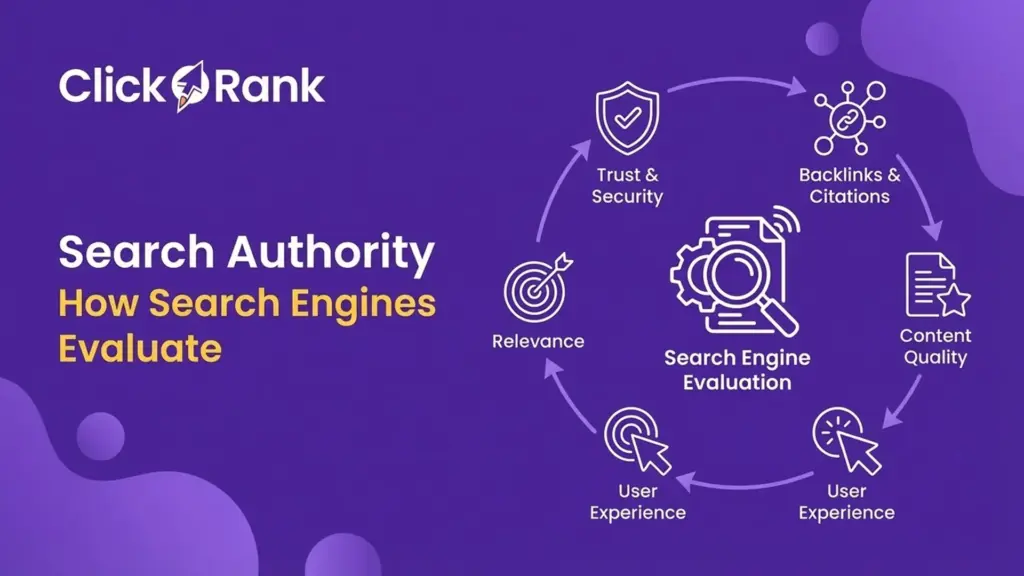
Today, Google’s modern ranking system is much more complex. It doesn’t rely on Page Rank alone; instead, it incorporates link authority alongside hundreds of other signals. This ensures that a page doesn’t rank just because it has links, but because it also provides a great user experience. These additional signals include:
- Content Relevance: Ensuring the page actually answers the user’s specific question.
- User Experience (UX): Factors like page load speed and mobile-friendliness.
- Semantic Understanding: Using AI to understand the meaning behind words, not just matching keywords.
Despite these changes, Page Rank remains the core “trust” signal. In the world of Link Building , a high-authority link is still the fastest way to prove to Google that your content is worth showing to users.
Page Rank vs Modern SEO Authority Metrics
Because public Page Rank scores are no longer visible, the SEO industry had to create its own ways to measure the “power” of a website. Most major SEO tools now use their own proprietary math to estimate how much authority a page or domain carries.
These metrics are incredibly helpful for Link Building because they give you a benchmark for a site’s strength before you reach out for a guest post or collaboration. The most common examples include:
- Domain Rating (DR) by Ahrefs: Measures the strength of a target website’s total backlink profile.
- Authority Score (AS) by Semrush: A compound metric that looks at backlink quality, organic traffic, and spam signals.
- Domain Authority (DA) by Moz: Predicts how likely a website is to rank on search engine result pages.
It is important to remember that these are estimates created by third-party companies, not Google itself. While a high DA or DR is a great sign, Google’s internal Page Rank is the only score that truly determines your final position in the search results.
How SEOs Improve Page Rank Today
Modern SEOs improve Page Rank by focusing on the quality and structure of their links rather than just the total number. Since Google’s internal algorithm has become much smarter, the goal is to build a “web of trust” that proves your site is a leader in its niche.
To boost your internal Page Rank scores, you need a strategy that combines external growth with smart site organization. This is where Link Building meets technical SEO. High-performing sites generally focus on these four pillars:
- High-Quality Backlinks: Instead of buying cheap links, SEOs work to earn editorial mentions from massive, authoritative sites. One link from a site like The New York Times or a major industry journal passes more Page Rank than thousands of low-tier blog comments.
- Strategic Internal Linking: You must ensure your “money pages” are well-supported. By linking from your high-traffic blog posts to your service pages, you distribute authority exactly where it’s needed most.
- Topical Authority: Creating clusters of related content shows Google that you have deep expertise. When multiple related pages link to each other, it builds a concentrated pool of authority that is hard for competitors to beat.
- Link Relevance: A link from a site in your exact industry is worth far more than a link from an unrelated niche. Google uses the context of the linking site to decide how much trust to pass along.
By following these modern standards, you ensure that your Page Rank grows naturally and stays resilient against future algorithm updates.
Common Page Rank Myths
There are many misconceptions about how Page Rank works in the modern SEO landscape. Because Google stopped showing public scores years ago, some people believe the system no longer exists, but that couldn’t be further from the truth.
Understanding the reality of these myths is essential for a successful Link Building strategy. If you base your SEO on outdated information, you might waste time on tactics that no longer provide value. Here are the most common myths debunked:
- Myth 1: Page Rank is dead. * Reality: While the public “toolbar” is gone, Google engineers have confirmed that Page Rank is still a core part of their internal ranking systems. It remains the foundation of how Google identifies which pages are the most important on the web.
- Myth 2: More backlinks always win. * Reality: In the early days, quantity was king. Today, link quality matters significantly more. One link from a high-authority, relevant site can pass more authority than 1,000 low-quality or spammy links.
- Myth 3: Internal links do not affect rankings. * Reality: Internal linking is one of the most powerful ways to control Page Rank flow. By linking your high-authority pages to your newer content, you help those new pages rank much faster.
By focusing on the facts rather than these common myths, you can build a more effective and sustainable SEO presence.
The Future of Page Rank in AI-Driven Search
As search engines evolve into AI-driven answer engines, the role of Page Rank is changing, but it isn’t disappearing. Google now combines its classic link-based system with advanced technologies to better understand the “why” behind a search query, not just the “who” is linking to it.
In the modern era of SEO, Page Rank works alongside several sophisticated systems to ensure the most accurate results:
- Machine Learning Ranking Systems: AI models like RankBrain and Google’s latest algorithms use past data to predict which pages will satisfy a user’s intent, often adjusting the weight of Page Rank in real-time.
- Entity Understanding: Google now recognizes “entities” (specific people, places, or things) and their relationships. A link from a recognized authority in a specific niche carries much more weight than a random backlink.
- Semantic Search Models: These models understand the context and meaning of words. This means your Link Building strategy must focus on relevance; a link from a site that is semantically related to your topic is far more powerful.
Despite these AI advancements, link authority remains a foundational ranking signal. AI needs a “ground truth” to determine which sources are trustworthy, and the way the web links together is still the most reliable map of human-vetted authority.
Ready to stop guessing and start growing? Don’t let your Page Rank go to waste on broken links or poor internal structure. Try the one-click optimizer to find and fix your SEO issues in seconds. Try Now!
What is Page Rank in SEO?
Page Rank is a link-analysis algorithm developed by Larry Page and Sergey Brin to measure the importance of webpages based on backlinks. Each link acts as a vote of confidence, and pages receiving links from authoritative websites gain more ranking power in search results.
How does the Page Rank algorithm work?
The Page Rank algorithm evaluates webpages by analyzing the quantity and quality of incoming links. When a page links to another page, it transfers a portion of its authority. Pages with stronger backlinks pass more ranking value, helping search engines determine which pages are most important.
What is the Page Rank formula?
The Page Rank formula calculates the probability that a user lands on a page by following links. It uses the formula: PR(A) = (1 − d) + d(PR(T1)/C(T1) + …) where d is the damping factor, T represents linking pages, and C represents outbound links.
Is Page Rank still used by Google?
Yes, Page Rank is still used internally by Google, although public Page Rank scores were removed in 2016. Today it functions as one of many ranking signals used to evaluate link authority and webpage importance in search algorithms.
What is the damping factor in Page Rank?
The damping factor in Page Rank represents the probability that a user continues clicking links instead of jumping to a random page. It is typically set to 0.85, meaning there is an 85% chance a user follows links and a 15% chance they start a new browsing path.
Why are backlinks important for Page Rank?
Backlinks are important because Page Rank treats links as signals of trust and authority. When a reputable website links to another page, it passes a portion of its Page Rank value, helping search engines evaluate the credibility and importance of the linked page.
How can SEOs improve Page Rank today?
SEOs improve Page Rank by earning high-quality backlinks, building strong internal link structures, and publishing authoritative content. These strategies help distribute link equity across pages and strengthen a website’s overall authority in search engines.

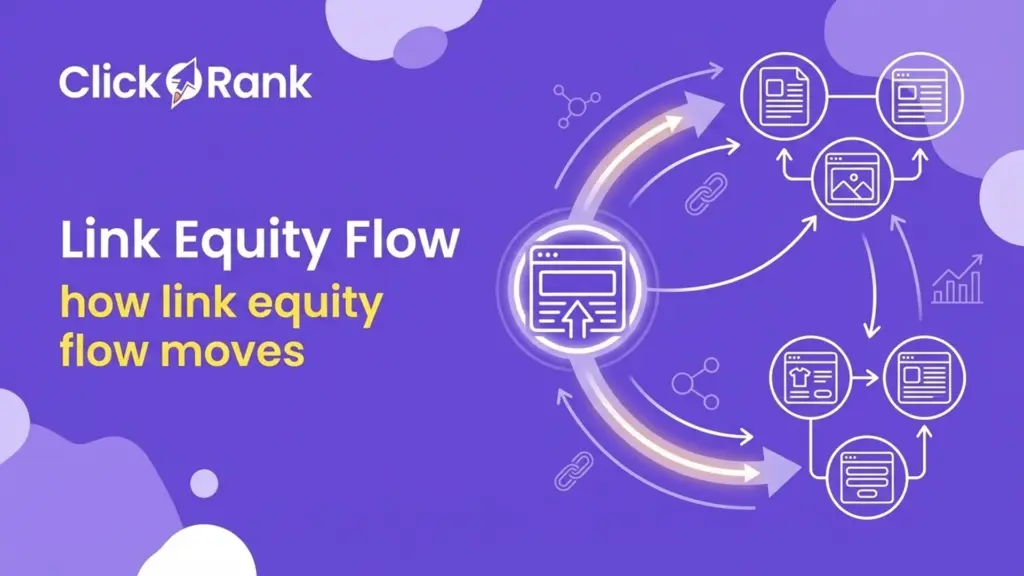

One thing that often gets overlooked when discussing PageRank is how much internal linking influences the flow of link equity across a site. Even with strong backlinks, poor internal structure can prevent important pages from receiving enough authority. It’s interesting how a concept from the early days of Google still shapes how we think about site architecture today.