SEO frameworks are structured systems that turn scattered SEO efforts into a clear, repeatable SEO process. If your rankings feel random or hard to scale, you likely need a defined SEO workflow or SEO strategy model. Many teams publish content, fix technical issues, and build links but without a framework, results stay inconsistent.
This guide solves that problem. You’ll learn how modern SEO frameworks create clarity, improve execution speed, and support long-term growth. We’ll break down different models, from enterprise SEO frameworks to AI-driven systems, and show how to build your own SEO roadmap.
If you’re new to structured planning, this article supports our main guide on SEO strategy and goes deeper into the systems that power real execution. By the end, you’ll have a practical SEO planning template you can apply immediately.
What Are SEO Frameworks and Why Do They Matter?
SEO frameworks are structured systems that organize your entire SEO process into clear, repeatable steps. They matter because they turn random actions into a defined SEO workflow that supports long-term growth. Instead of publishing content or fixing pages without direction, teams follow a structured SEO strategy model aligned with business goals.
In 2026, search is more complex due to AI results, entity-based indexing, and user intent shifts. A defined SEO framework helps teams stay focused on priorities instead of reacting to every update. It also improves collaboration between content, technical, and marketing teams.
When you use a clear SEO roadmap, you reduce wasted effort, improve forecasting, and create scalable results. That’s why structured SEO planning templates are now essential not optional.
What is an SEO framework in simple terms?
An SEO framework is a step-by-step system that guides how you plan, execute, and measure SEO work. It acts like a blueprint for your SEO process so nothing important is missed. Instead of guessing what to do next, your SEO workflow follows defined stages such as research, prioritization, implementation, and measurement.
This matters because SEO has many moving parts technical fixes, content updates, link building, and analytics. A framework connects them into one system. For example, an enterprise SEO framework may include governance rules, reporting cycles, and approval workflows to maintain consistency.
In simple terms, SEO frameworks bring structure to SEO strategy. They help teams move from reactive actions to predictable growth using a repeatable SEO methodology.
How do frameworks differ from SEO strategies and tactics?
SEO frameworks provide the structure, while SEO strategies define direction, and tactics are individual actions. A strategy explains what you want to achieve. Tactics are specific activities like optimizing a title tag. The framework connects everything into one organized SEO workflow.
For example:
- Strategy: Increase organic traffic by 30%.
- Tactic: Improve internal linking on blog posts.
- Framework: The system that prioritizes, assigns, tracks, and measures both.
Without a framework, strategies stay theoretical and tactics become random tasks. A strong SEO strategy model ensures every tactic fits into a larger SEO roadmap.
Think of it this way: strategy is the destination, tactics are the tools, and the SEO framework is the map that keeps everything aligned.
Why do modern SEO teams rely on structured frameworks?
Modern SEO teams rely on structured frameworks because complexity has increased dramatically. AI-driven search, entity-based ranking, and cross-channel attribution require more coordination than ever. A defined SEO process ensures teams stay aligned and scalable.
Large teams especially need an SEO governance framework to manage approvals, quality control, and reporting standards. Without it, work becomes inconsistent, and performance drops. Even smaller teams benefit from an SEO planning template that prevents missed steps.
Frameworks also support forecasting and measurement. When your SEO workflow is standardized, you can predict outcomes more accurately and reduce risk.
In short, SEO frameworks transform scattered efforts into a repeatable system that supports growth, clarity, and long-term authority.
What Are the Core Components of an Effective SEO Framework?
An effective SEO framework is built on four core pillars: technical structure, content systems, authority building, and user experience optimization. These components form the foundation of a scalable SEO process that supports long-term rankings and growth. Without all four working together, your SEO workflow becomes unstable.
In 2026, search engines evaluate sites as complete ecosystems not isolated pages. A strong SEO strategy model must connect crawlability, content relevance, authority signals, and engagement data into one system. This is why modern SEO frameworks go beyond keywords and backlinks.
When your SEO roadmap clearly defines these pillars, execution becomes predictable. You stop fixing problems randomly and start improving the system as a whole.
Which foundational pillars support sustainable SEO?
Sustainable SEO relies on four foundational pillars: technical infrastructure, content systems, authority ecosystems, and engagement signals. These pillars ensure your SEO process remains stable, scalable, and future-ready. Removing one weakens the entire SEO workflow.
Each pillar plays a unique role. Technical infrastructure ensures search engines can access and understand your site. Content systems provide consistent value aligned with search intent. Authority ecosystems build trust through links and brand signals. User engagement confirms relevance through behavior metrics.
A strong enterprise SEO framework documents these pillars clearly. This prevents teams from focusing only on content or only on links. Instead, your SEO planning template balances all growth drivers inside one structured SEO methodology.
Technical infrastructure
Technical infrastructure forms the base of any reliable SEO framework. It ensures search engines can crawl, index, and interpret your site correctly. Without strong foundations, even great content will struggle to rank.
This includes clean site architecture, logical internal linking, fast load speeds, mobile optimization, structured data, and proper indexing controls. A strong technical layer reduces crawl waste and helps search engines understand entity relationships across pages.
For enterprise SEO frameworks, technical governance becomes critical. Large sites must standardize URL structures, metadata rules, and schema implementation across teams. If this layer breaks, the entire SEO process slows down.
Think of technical infrastructure as the engine of your SEO workflow. If it runs smoothly, everything else performs better.
Content systems
Content systems ensure your SEO strategy model produces consistent, high-quality assets aligned with search intent. Instead of publishing randomly, your SEO workflow follows a structured editorial roadmap.
This includes keyword research clusters, search intent mapping, content briefs, editorial standards, and internal linking rules. A defined system prevents duplicate topics and ensures topical authority grows over time.
In modern SEO frameworks, content must also align with entity signals and AI search visibility. This means covering related subtopics, answering questions clearly, and building structured topic clusters.
A scalable SEO planning template always includes repeatable content processes. When systems are documented, teams can produce optimized content consistently without lowering quality.
Authority & link ecosystems
Authority and link ecosystems strengthen trust signals within your SEO framework. Search engines use backlinks, brand mentions, and entity recognition to evaluate credibility.
This pillar includes link acquisition strategies, digital PR, partnerships, and brand visibility efforts. It also involves monitoring toxic links as part of an SEO risk management framework.
Modern SEO methodology goes beyond backlinks alone. Authority now includes topical depth, entity associations, and consistent expertise signals. Enterprise SEO frameworks often track link velocity and domain growth trends to forecast authority improvements.
When your SEO workflow integrates authority building with content strategy, growth compounds. Links should support strategic content not exist in isolation.
User experience & engagement signals
User experience and engagement signals confirm whether your SEO framework truly satisfies search intent. Search engines analyze behavior data like click-through rates, dwell time, and interaction patterns.
This pillar includes page speed optimization, clear design structure, helpful formatting, strong calls-to-action, and mobile responsiveness. Engagement also connects to content clarity and information depth.
In AI-driven search environments, user satisfaction becomes even more important. Pages that solve problems quickly gain stronger visibility signals. That’s why SEO frameworks must integrate UX teams into the SEO process.
When engagement improves, rankings stabilize. A strong SEO workflow treats UX not as design support but as a ranking factor.
How do these components work together as a system?
These components work together by reinforcing each other inside one unified SEO process. Technical infrastructure enables content discovery. Content builds topical authority. Authority signals increase trust. Engagement confirms relevance. Together, they create a self-strengthening SEO workflow.
If one pillar weakens, the entire SEO framework slows down. For example, strong content without authority may not rank. Strong links without technical structure may not index correctly.
A structured SEO roadmap ensures teams measure all pillars not just traffic. Modern SEO methodology connects reporting dashboards, prioritization models, and forecasting systems across departments.
When integrated properly, these components form a complete SEO strategy model that supports scalable growth rather than short-term spikes.
What Types of SEO Frameworks Exist Today?
Several types of SEO frameworks exist today, each designed to solve different growth and scaling challenges. The most common include strategic SEO frameworks, operational SEO workflow frameworks, content-led models, enterprise SEO governance frameworks, and AI-driven SEO frameworks. Choosing the right SEO framework depends on your team size, goals, and complexity.
Modern search requires structured systems, not isolated tactics. A startup may need a simple SEO process focused on content velocity, while an enterprise requires governance, forecasting, and cross-team coordination. Each SEO strategy model addresses a specific layer of execution.
Understanding these types helps you build a customized SEO roadmap instead of copying someone else’s approach. The right framework ensures your SEO workflow supports long-term scalability and measurable results.
What is a strategic SEO framework?
A strategic SEO framework defines long-term direction, priorities, and competitive positioning. It focuses on where to compete, which audiences to target, and how SEO supports business goals. This type of SEO framework connects organic growth with revenue objectives.
It typically includes:
- Market and competitor analysis
- Keyword opportunity mapping
- Topical authority planning
- Forecasting models
Unlike daily task management, this SEO strategy model operates at a leadership level. It shapes your SEO roadmap for 6–12 months or longer. For example, a company may choose to dominate one core topic cluster instead of spreading resources thin.
Without a strategic SEO framework, teams chase short-term wins. With it, every SEO process decision aligns with clear business outcomes.
What is an operational SEO workflow framework?
An operational SEO workflow framework defines how SEO work gets executed step by step. It focuses on processes, timelines, responsibilities, and reporting systems. This type of SEO framework ensures strategy turns into measurable action.
A strong SEO workflow includes:
- Research and opportunity analysis
- Prioritization and planning
- Implementation
- Measurement and iteration
This structure reduces confusion and prevents missed steps. Teams know exactly what happens next and who owns each task. It also improves collaboration between content, developers, and marketing teams.
An operational SEO methodology is essential for scaling. Without it, strategies stay theoretical. With it, your SEO process becomes repeatable, trackable, and efficient.
What is a content-led SEO framework?
A content-led SEO framework prioritizes content systems as the main growth engine. It builds topical authority through structured clusters, search intent mapping, and consistent publishing cycles. This SEO framework works well for brands that rely heavily on organic visibility.
Instead of random blog posts, this SEO strategy model follows a defined content architecture:
- Pillar pages
- Supporting cluster content
- Internal linking structures
- Entity-based coverage
The SEO roadmap focuses on depth over volume. Each topic expands logically to strengthen authority signals. This model is powerful in AI search environments where comprehensive coverage improves visibility.
However, content-led frameworks must still integrate technical and authority pillars. Without balance, the SEO process may lack competitive strength.
What is an enterprise SEO governance framework?
An enterprise SEO governance framework establishes rules, roles, and oversight systems across large organizations. It ensures SEO standards remain consistent across departments, websites, and regions. This SEO framework prevents fragmentation.
Large companies face challenges such as:
- Multiple content teams
- Independent development cycles
- Legal and compliance approvals
- Regional site variations
A governance-focused SEO strategy model defines approval processes, documentation standards, KPI reporting, and accountability structures. It often includes an SEO maturity model to track organizational progress.
Without governance, enterprise SEO workflows become inconsistent and risky. With it, scaling becomes controlled and predictable across teams.
How do AI-driven SEO frameworks differ from traditional models?
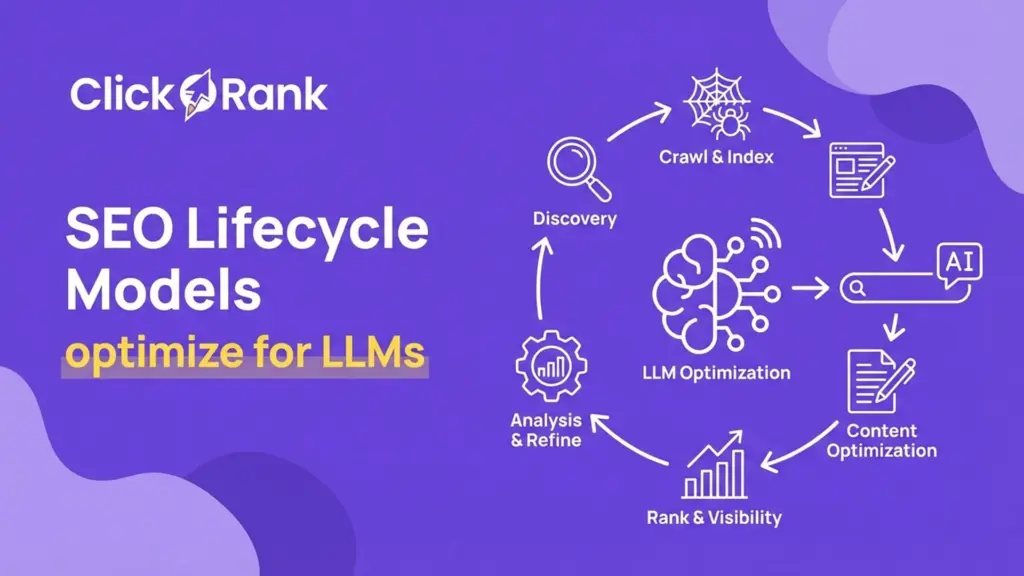
AI-driven SEO frameworks use automation and machine learning to enhance decision-making and execution speed. Unlike traditional SEO frameworks that rely heavily on manual analysis, AI-powered models support forecasting, content optimization, and entity mapping at scale.
For example, AI can:
- Identify content gaps faster
- Analyze SERP intent patterns
- Generate structured briefs
- Detect ranking volatility
However, AI-driven SEO frameworks still require human oversight. They enhance the SEO process but do not replace strategy. The best SEO methodology combines automation with expert review.
Traditional frameworks focus on structure. AI frameworks add predictive intelligence. When integrated correctly, they improve efficiency without sacrificing quality or governance.
How Does the See-Think-Do-Care SEO Framework Work?
The See-Think-Do-Care (STDC) model works by aligning your SEO framework with real customer intent stages. Instead of targeting only transactional keywords, this SEO strategy model supports users before, during, and after purchase. It transforms your SEO process from keyword-focused to journey-focused.
In modern search, especially with AI results, intent depth matters more than ever. A structured SEO workflow built around STDC ensures your content appears at every stage of decision-making. This prevents traffic gaps and strengthens long-term authority.
By integrating STDC into your SEO roadmap, you create balanced visibility. You attract awareness traffic, nurture consideration, capture conversions, and maintain loyalty. That makes this framework powerful for sustainable growth.
How can this model align SEO with the customer journey?
The STDC model aligns SEO with the customer journey by mapping keywords and content to intent stages. Instead of treating all traffic equally, your SEO framework adapts messaging to user mindset.
Here’s how it fits into your SEO process:
- See: Broad informational queries with low buying intent
- Think: Comparison and research-focused searches
- Do: High-intent transactional searches
- Care: Post-purchase support and loyalty queries
This alignment improves targeting precision. For example, trying to convert “what is SEO workflow” searches directly into sales may fail. But guiding them through Think-stage content increases trust.
A structured SEO strategy model ensures each stage supports the next. This creates a connected SEO roadmap instead of isolated keyword targeting.
What content types fit each stage?
Each STDC stage requires different content types to match user intent. Your SEO framework must design content around mindset, not just keywords.
- See Stage:
Blog guides, educational articles, infographics, industry trends.
Goal: Build awareness and topical authority. - Think Stage:
Comparison pages, case studies, detailed guides, webinars.
Goal: Help users evaluate solutions. - Do Stage:
Landing pages, product pages, demos, pricing pages.
Goal: Convert high-intent visitors. - Care Stage:
Tutorials, FAQs, onboarding guides, community resources.
Goal: Retain and expand customer value.
A well-built SEO workflow distributes effort across all stages. If your SEO process only focuses on Do-stage keywords, growth will plateau. Balanced coverage strengthens your full-funnel SEO strategy model.
What Is the Pillar-Cluster Framework and Why Is It Effective?
The pillar-cluster framework is an SEO framework that organizes content into one core pillar page supported by multiple related cluster pages. It is effective because it builds strong topical authority and improves internal linking structure. Instead of publishing isolated articles, this SEO strategy model connects content into a clear theme.
Search engines now rank topics, not just keywords. A structured SEO process using pillar and cluster architecture helps search engines understand subject depth and entity relationships. It also improves crawl efficiency and user navigation.
When added to your SEO roadmap, the pillar-cluster model creates scalable growth. It strengthens rankings across multiple related keywords while supporting long-term authority within your SEO workflow.
How do topic clusters improve topical authority?
Topic clusters improve topical authority by covering a subject deeply and linking related content together. Instead of writing random blog posts, your SEO framework builds a content ecosystem around one central theme.
For example, a pillar page about “SEO frameworks” may link to clusters on SEO workflow, SEO governance framework, and SEO measurement framework. Each cluster supports the pillar while targeting long-tail variations.
This structure sends clear signals to search engines:
- You cover the topic comprehensively
- Content is logically organized
- Internal relevance is strong
A content-led SEO strategy model uses clusters to dominate entire subject areas instead of single keywords. Over time, this strengthens trust, improves rankings, and supports a scalable SEO process.
What internal linking patterns maximize impact?
Internal linking patterns maximize impact when clusters link to the pillar and the pillar links back to each cluster. This two-way linking strengthens topical signals inside your SEO framework.
The most effective SEO workflow follows these patterns:
- Pillar → Cluster Links:
The pillar page links to all supporting cluster articles. - Cluster → Pillar Links:
Every cluster links back to the main pillar using descriptive anchor text. - Cluster → Cluster Links (Selective):
Related cluster pages link to each other when contextually relevant.
This creates a strong content hub structure. It improves crawl depth, distributes authority evenly, and reinforces your SEO strategy model.
When internal linking is intentional not random your SEO roadmap becomes more powerful and predictable.
How Does the Entity-First SEO Framework Improve Relevance?
The entity-first SEO framework improves relevance by optimizing for concepts and relationships instead of just keywords. This SEO framework focuses on how search engines understand people, places, brands, and topics as connected entities inside knowledge graphs. It shifts your SEO process from keyword targeting to meaning targeting.
Modern search engines rely heavily on entity recognition to interpret context. If your SEO strategy model only repeats keywords without building semantic relationships, rankings may struggle. An entity-first SEO workflow strengthens topical clarity and improves AI search visibility.
When integrated into your SEO roadmap, this framework helps search engines clearly understand who you are, what you cover, and how your content connects across topics.
What are entities and knowledge graphs in search?
Entities are distinct concepts like brands, people, products, or topics, and knowledge graphs connect these entities through relationships. Search engines use them to understand meaning beyond exact keywords.
For example, “SEO framework,” “SEO process,” and “SEO workflow” may connect inside a knowledge graph as related entities. Search engines analyze how often they appear together and in what context.
This matters because modern ranking systems evaluate topic depth and relationships not just keyword frequency. A strong SEO framework must support entity clarity through:
- Structured data
- Clear definitions
- Contextual internal linking
- Consistent terminology
When your SEO strategy model strengthens entity associations, search engines trust your authority more. That improves semantic relevance across your SEO workflow.
How can entity mapping strengthen content strategy?
Entity mapping strengthens content strategy by identifying related concepts and ensuring they are properly connected across your SEO framework. Instead of guessing subtopics, your SEO process becomes structured around semantic coverage.
Here’s how it improves your SEO workflow:
- Identify core topic entities (e.g., SEO framework, SEO roadmap).
- Map related sub-entities and supporting concepts.
- Create content clusters covering those relationships.
- Use internal linking to reinforce semantic connections.
This approach prevents thin or disconnected articles. It ensures your SEO strategy model builds depth and context across pages.
An entity-first SEO roadmap helps AI-driven search systems better understand your expertise. Over time, this improves rankings, visibility, and long-term authority.
What Is a Repeatable SEO Workflow Framework?
A repeatable SEO workflow framework is a structured system that defines how SEO work moves from idea to measurable results. It ensures your SEO process follows clear stages instead of random actions. This type of SEO framework turns strategy into execution through documented steps.
In modern search environments, speed and consistency matter. Without a defined SEO workflow, teams skip research, mis-prioritize tasks, or fail to measure results correctly. A strong SEO strategy model prevents this by outlining exactly what happens at each stage.
When your SEO roadmap includes a repeatable workflow, performance becomes predictable. You reduce wasted effort, improve collaboration, and create scalable growth inside your overall SEO framework.
What steps should every SEO workflow include?
Every SEO workflow should include research, prioritization, implementation, and measurement. These four stages form the backbone of a reliable SEO framework. Skipping any one stage weakens the entire SEO process.
This structured SEO strategy model ensures:
- Opportunities are validated before action
- Resources are allocated intelligently
- Execution follows best practices
- Results are tracked and improved
A documented SEO planning template makes this workflow repeatable across campaigns and teams. Whether you run a small content site or an enterprise SEO framework, these stages remain essential.
Below is how each stage works inside a scalable SEO workflow.
Research & opportunity analysis
Research and opportunity analysis identify where growth potential exists before any action is taken. This stage ensures your SEO framework is data-driven, not assumption-based.
It includes keyword research, competitor gap analysis, search intent mapping, and technical audits. You also evaluate traffic potential, ranking difficulty, and conversion value. In advanced SEO workflows, this stage may include entity mapping and SERP feature analysis.
Without proper research, teams often create content that lacks demand or targets overly competitive terms. A structured SEO process prevents wasted resources by validating opportunities first.
Strong research aligns your SEO roadmap with business impact. It ensures every next step is backed by measurable opportunity.
Prioritization & forecasting
Prioritization and forecasting determine which opportunities deserve attention first and estimate potential outcomes. This stage protects your SEO framework from becoming overloaded with low-impact tasks.
Here, teams evaluate effort versus impact. High-impact, low-effort improvements often move to the top of the SEO workflow. Larger initiatives may require phased planning inside the SEO roadmap.
Forecasting models estimate traffic growth, ranking improvements, and revenue potential. In enterprise SEO frameworks, this stage supports stakeholder buy-in and budget approval.
Without prioritization, execution becomes scattered. With it, your SEO strategy model stays focused on actions that deliver measurable growth.
Implementation & optimization
Implementation and optimization turn plans into real SEO improvements. This is where your SEO workflow executes technical fixes, content updates, and authority-building initiatives.
Tasks may include improving internal linking, optimizing metadata, enhancing page structure, publishing cluster content, or resolving crawl issues. A structured SEO framework ensures all changes follow documented standards.
Optimization does not stop after publishing. Continuous refinement based on performance data strengthens rankings over time. This iterative approach keeps your SEO process aligned with search engine updates.
When execution follows a repeatable system, quality remains consistent even as scale increases.
Measurement & iteration
Measurement and iteration close the loop inside your SEO framework. This stage evaluates whether your SEO workflow produced the expected results and identifies improvements.
Key metrics may include rankings, organic traffic, click-through rates, conversions, and engagement signals. A strong SEO strategy model distinguishes between leading indicators (like impressions) and lagging indicators (like revenue).
Iteration means adjusting tactics based on performance insights. Underperforming pages are optimized, while successful strategies are scaled further.
Without measurement, SEO becomes guesswork. With a structured feedback loop, your SEO roadmap evolves continuously making the entire SEO process smarter over time.
How Do Agile SEO Frameworks Improve Execution Speed?
Agile SEO frameworks improve execution speed by breaking large SEO initiatives into short, focused sprints. Instead of waiting months to launch changes, teams execute improvements in small, measurable cycles. This SEO framework increases flexibility and reduces delays inside the SEO process.
Traditional SEO workflows often suffer from long approval chains and unclear ownership. An agile SEO strategy model introduces sprint planning, backlog prioritization, and weekly performance reviews. This creates momentum while keeping work aligned with the SEO roadmap.
In fast-changing AI search environments, speed matters. Agile SEO frameworks allow teams to test, learn, and adjust quickly without losing structure. The result is a faster, more adaptive SEO workflow that still supports long-term strategy.
What is sprint-based SEO?
Sprint-based SEO is a structured approach where SEO tasks are completed in short time cycles, usually two to four weeks. Each sprint focuses on a defined set of priorities from the SEO roadmap.
A typical sprint includes:
- Selecting high-impact SEO tasks
- Assigning clear ownership
- Setting measurable goals
- Reviewing results at sprint end
This method keeps the SEO process focused and avoids overwhelming teams with large projects. For example, one sprint may target internal linking improvements, while another focuses on optimizing high-impression pages.
Sprint-based SEO strengthens accountability within your SEO framework. It ensures continuous progress instead of waiting for large, slow rollouts inside your overall SEO workflow.
How can teams integrate SEO into agile product cycles?
Teams can integrate SEO into agile product cycles by embedding SEO tasks directly into development sprints. Instead of treating SEO as a separate activity, it becomes part of the product workflow.
This integration requires:
- Adding SEO requirements to product briefs
- Including technical SEO checks in release cycles
- Assigning SEO stakeholders in sprint planning meetings
- Measuring SEO impact alongside product metrics
For example, when launching a new feature, SEO teams ensure URL structure, metadata, and internal linking follow the defined SEO framework.
When SEO is included early, technical issues decrease and launch visibility improves. This alignment strengthens the entire SEO strategy model and makes your SEO workflow faster, cleaner, and more scalable.
What Is an SEO Testing Framework and Why Is It Critical?
An SEO testing framework is a structured system for running controlled experiments to measure what actually improves rankings and traffic. It is critical because SEO assumptions often fail without real validation. Instead of guessing which change will work, this SEO framework uses data to guide decisions inside your SEO process.
Search algorithms change constantly. What worked last year may not work today. A structured SEO workflow for testing reduces risk and improves confidence in optimization decisions. It also prevents large-scale updates that could harm performance.
When added to your SEO roadmap, testing creates continuous improvement. Your SEO strategy model becomes evidence-based rather than opinion-driven, which is essential for sustainable growth.
What elements can be tested safely?
Many on-page and structural elements can be tested safely without risking major ranking loss. A proper SEO framework isolates variables so changes are measured accurately inside the SEO process.
Common testable elements include:
- Title tag variations
- Meta descriptions
- Internal linking structures
- Header tag formats
- Content depth and formatting
- Schema markup adjustments
For example, you might test two title formats across similar page groups to measure click-through rate impact. Or adjust internal linking on selected pages to observe ranking changes.
A structured SEO workflow ensures you test small page groups instead of the entire site. This protects your SEO strategy model from large-scale damage while still generating insights for your SEO roadmap.
How do you design statistically valid SEO experiments?
Statistically valid SEO experiments require controlled page groups, clear variables, and measurable timeframes. Without structure, results become misleading. A strong SEO framework ensures experiments follow disciplined methodology.
Here is a simplified process inside your SEO workflow:
- Select similar pages (control group vs. test group).
- Change only one variable in the test group.
- Define a fixed measurement period (e.g., 4–6 weeks).
- Track impressions, rankings, and click-through rates.
- Compare performance against the control group.
Avoid testing too many elements at once. That breaks experiment clarity. A well-documented SEO process records hypotheses and expected outcomes before testing begins.
When integrated into your SEO roadmap, testing strengthens your SEO strategy model with real, defensible data.
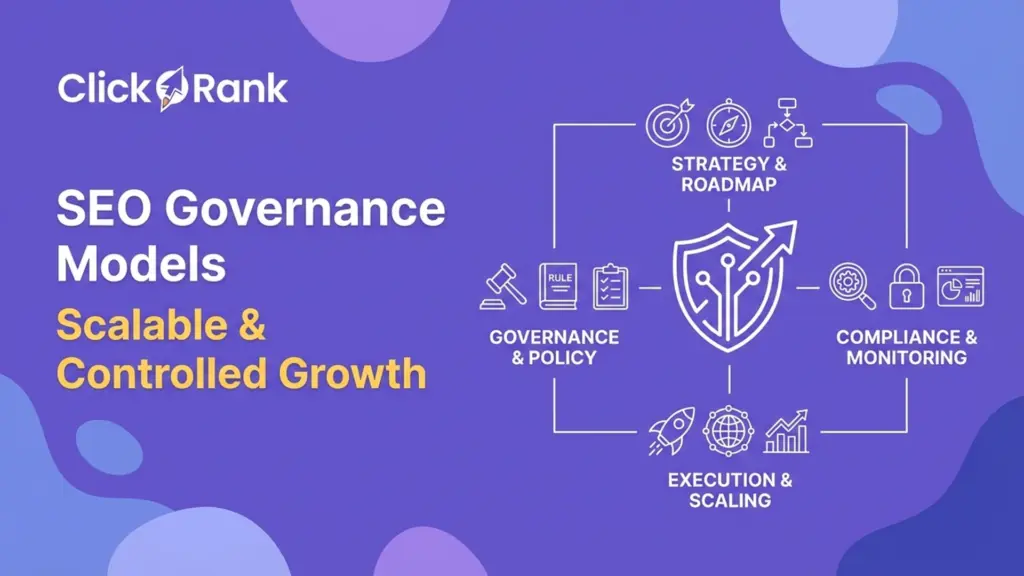
What Is an SEO Governance Framework?
An SEO governance framework is a structured system that defines rules, ownership, and accountability for SEO execution across an organization. It ensures your SEO process stays consistent, compliant, and aligned with business goals. Without governance, even strong SEO frameworks break down at scale.
Large websites often involve multiple teams publishing content, launching features, or updating technical systems. If SEO standards are not documented, errors multiply quickly. A governance-focused SEO strategy model prevents duplication, technical conflicts, and inconsistent messaging.
When included in your SEO roadmap, governance improves long-term stability. It transforms your SEO workflow from reactive fixes to controlled, scalable growth especially inside enterprise SEO frameworks.
Why do large organizations need SEO governance?
Large organizations need SEO governance because multiple teams impact search visibility simultaneously. Without structure, content teams, developers, and marketing departments may unintentionally damage the SEO process.
Common risks include:
- Publishing duplicate content
- Changing URL structures without redirects
- Removing metadata during redesigns
- Launching pages without optimization
An enterprise SEO framework introduces documented guidelines, review systems, and approval checkpoints. This ensures every department follows the same SEO planning template.
Governance also protects brand authority and reduces algorithm-related risk. In complex environments, a structured SEO framework keeps execution aligned with strategy instead of allowing isolated decisions to weaken performance.
What roles and responsibilities should be defined?
An effective SEO governance framework clearly defines ownership across leadership, content, development, and compliance teams. Without defined roles, accountability disappears and your SEO workflow slows down.
Each group plays a specific role inside the SEO process. Governance documents clarify decision rights, reporting lines, and approval structures. This prevents confusion and ensures consistency.
Below are the key responsibilities within a scalable SEO strategy model.
SEO leadership
SEO leadership sets direction, priorities, and performance benchmarks inside the SEO framework. They define the overall SEO roadmap, allocate resources, and align SEO goals with business objectives.
Leaders are responsible for forecasting growth, managing risk, and reporting results to executives. They also ensure governance policies are enforced across departments. In enterprise SEO frameworks, leadership defines documentation standards and approves major technical or content shifts.
Without strong leadership, SEO becomes fragmented. With it, the SEO process stays strategic and measurable rather than reactive.
Content teams
Content teams execute topic planning, content creation, and on-page optimization inside the SEO workflow. Governance ensures they follow structured briefs, internal linking standards, and metadata guidelines.
Responsibilities include maintaining topical consistency, aligning with entity-first principles, and updating underperforming pages. A documented SEO planning template helps content teams avoid duplication and keyword cannibalization.
Governance also ensures editorial quality aligns with brand standards and search intent. When content teams operate within a defined SEO framework, authority builds consistently over time.
Developers & product managers
Developers and product managers control technical implementation inside the SEO process. Governance ensures SEO requirements are embedded into development cycles, not treated as afterthoughts.
Their responsibilities include maintaining crawlability, structured data, page speed, URL logic, and redirect management. SEO checks should be part of release workflows to prevent technical damage.
When development teams understand the SEO strategy model, they design systems that support visibility rather than conflict with it. Governance bridges the gap between technical execution and search performance.
Compliance & legal stakeholders
Compliance and legal stakeholders ensure SEO content and technical practices meet regulatory standards. In regulated industries, their involvement is essential inside the SEO framework.
Governance defines review checkpoints to avoid delays while maintaining compliance. This includes claims validation, privacy disclosures, and structured approval workflows.
Without clear coordination, legal reviews can slow the SEO workflow significantly. A structured governance model balances compliance needs with growth priorities, protecting both visibility and brand integrity.
How Can Standard Operating Procedures (SOPs) Improve SEO Consistency?
Standard Operating Procedures (SOPs) improve SEO consistency by documenting repeatable steps inside your SEO framework. They turn your SEO process into a controlled system instead of relying on memory or individual habits. When workflows are written and shared, quality stays stable even as teams grow.
In modern SEO frameworks, inconsistency is a major risk. Different writers may optimize pages differently. Developers may apply technical rules unevenly. A structured SEO workflow supported by SOPs eliminates this variation.
When included in your SEO roadmap, SOPs protect performance, reduce onboarding time, and support scalable execution. They make your SEO strategy model dependable instead of personality-driven.
What processes should be standardized?
Any recurring SEO task should be standardized inside your SEO framework. If an activity happens more than once, it should have a documented process in your SEO workflow.
Common processes to standardize include:
- Keyword research methodology
- Content brief creation
- On-page optimization checklist
- Internal linking rules
- Technical audit steps
- Reporting templates
For example, every new article should follow the same SEO planning template for headers, metadata, and entity usage. Technical updates should follow consistent validation steps.
When your SEO process documents these workflows clearly, execution becomes faster and less error-prone. A structured SEO framework ensures no critical steps are skipped.
How do SOPs reduce risk and errors?
SOPs reduce risk and errors by creating clear accountability and step-by-step verification inside your SEO process. They remove guesswork and prevent important tasks from being overlooked.
For example, without a documented SEO workflow, a developer might remove canonical tags during a redesign. With SOPs, technical validation becomes mandatory before deployment.
SOPs also protect against algorithm-related risk. A consistent SEO strategy model ensures content quality, internal linking, and metadata standards remain stable across updates.
Inside a mature SEO framework, SOPs act as safety rails. They maintain quality, protect authority, and ensure your SEO roadmap continues moving forward without unexpected disruptions.
How Do You Build an SEO Measurement Framework?
You build an SEO measurement framework by defining clear KPIs, aligning them with business goals, and tracking them consistently inside your SEO process. A strong SEO framework does not measure traffic alone it connects performance to revenue, engagement, and growth stages. Without structured measurement, your SEO workflow becomes guesswork.
Modern SEO frameworks require deeper visibility because AI-driven search and SERP features affect click behavior. A defined SEO strategy model separates awareness metrics from conversion metrics so teams avoid misleading conclusions.
When your SEO roadmap includes a formal measurement structure, decisions become data-driven. This improves forecasting, prioritization, and stakeholder trust inside your overall SEO framework.
Which KPIs matter at each funnel stage?
The right KPIs depend on where the user sits in the funnel within your SEO framework. Measuring the wrong metrics at the wrong stage can distort your SEO process.
Here’s how KPIs typically align:
- Awareness (Top Funnel):
Impressions, keyword reach, organic visibility share - Consideration (Mid Funnel):
Click-through rate, time on page, engagement depth - Conversion (Bottom Funnel):
Leads, sales, conversion rate, assisted revenue - Retention (Post-Purchase):
Returning visitors, branded search growth, lifetime value
A structured SEO workflow ensures each stage has clear measurement criteria. Your SEO strategy model should avoid focusing only on rankings while ignoring engagement and revenue signals.
Balanced tracking strengthens your SEO roadmap and long-term performance clarity.
How can leading vs. lagging indicators guide decisions?
Leading indicators predict future growth, while lagging indicators confirm past results inside your SEO framework. Both are essential for a healthy SEO process.
Leading indicators include:
- Impressions growth
- Ranking improvements
- Internal link coverage
- Content publication velocity
Lagging indicators include:
- Organic traffic
- Conversions
- Revenue impact
For example, if impressions rise but traffic does not, your SEO workflow may need CTR optimization. If rankings improve but revenue stays flat, intent alignment may be weak.
A mature SEO strategy model balances both indicator types. Leading metrics guide proactive adjustments, while lagging metrics validate ROI. Together, they strengthen your SEO roadmap and reduce reactive decision-making.
What Is an SEO Attribution Framework?
An SEO attribution framework is a structured system that measures how organic search contributes to conversions across multiple marketing channels. It ensures your SEO framework tracks influence, not just last-click conversions. Without attribution, your SEO process may undervalue early-stage traffic that assists sales later.
Modern customer journeys are multi-touch. A user may discover your site through organic search, return via email, and convert through paid ads. A strong SEO strategy model captures this interaction instead of crediting only the final click.
When your SEO roadmap includes attribution modeling, reporting becomes more accurate. This strengthens stakeholder confidence and ensures your SEO workflow receives proper budget allocation based on real impact.
How do you measure SEO’s contribution across channels?
You measure SEO’s contribution by tracking assisted conversions, multi-touch paths, and cross-channel behavior. A mature SEO framework analyzes how organic search supports other marketing efforts.
Key measurement methods include:
- Assisted conversion reports
- Conversion path analysis
- First-touch vs. last-touch comparisons
- Channel interaction reports
For example, organic traffic may introduce users at the awareness stage, while retargeting ads close the sale. Without attribution tracking, SEO appears less effective than it actually is.
Integrating attribution into your SEO process ensures visibility into true influence. A well-defined SEO workflow connects organic performance to overall marketing outcomes, not isolated metrics.
What attribution models work best for organic search?
The best attribution models for organic search are multi-touch models that distribute credit across the customer journey. Relying only on last-click attribution weakens your SEO framework by ignoring early-stage influence.
Common models include:
- First-click attribution: Credits SEO when it initiates discovery.
- Linear attribution: Distributes credit evenly across touchpoints.
- Time-decay attribution: Gives more weight to recent interactions.
- Position-based attribution: Assigns higher credit to first and last interactions.
For most SEO strategy models, position-based or linear attribution works best. These reflect how SEO supports both awareness and conversion.
Including attribution inside your SEO roadmap ensures your SEO workflow receives accurate performance recognition and strategic investment.
How Can SEO Forecasting Frameworks Improve Stakeholder Buy-In?
SEO forecasting frameworks improve stakeholder buy-in by translating your SEO strategy model into projected traffic, revenue, and ROI outcomes. Instead of asking for budget based on assumptions, this SEO framework presents data-backed growth scenarios. It makes your SEO process predictable and easier to approve.
Executives think in numbers, not keywords. A structured SEO workflow connects ranking improvements to traffic projections and estimated conversion value. This builds trust and reduces resistance.
When forecasting is part of your SEO roadmap, conversations shift from “Why invest in SEO?” to “How fast can we scale?” That clarity strengthens long-term support for your SEO framework.
What data inputs are required for accurate forecasts?
Accurate SEO forecasts require reliable historical, competitive, and conversion data. A strong SEO framework does not guess outcomes it models them based on measurable inputs.
Key data inputs include:
- Current keyword rankings
- Search volume trends
- Click-through rate benchmarks
- Conversion rates
- Average order value or lead value
- Competitor traffic estimates
For example, if a page ranks #8 and search volume is 10,000 monthly searches, moving to #3 has predictable CTR impact. That projection feeds into revenue modeling.
A structured SEO process combines these variables into traffic scenarios. When forecasting aligns with your SEO strategy model, stakeholders gain realistic expectations from your SEO roadmap.
How do you communicate uncertainty and risk?
You communicate uncertainty by presenting forecast ranges instead of fixed promises. A mature SEO framework acknowledges algorithm shifts, competition changes, and market volatility inside the SEO process.
Best practices include:
- Showing conservative, moderate, and aggressive scenarios
- Highlighting external risks
- Explaining ranking variability
- Connecting forecasts to controllable actions
For example, instead of promising 50% growth, present a 25–50% range based on ranking improvements. This builds credibility inside your SEO workflow.
Transparency strengthens trust. When stakeholders understand both opportunity and risk, your SEO strategy model gains long-term support instead of short-term pressure.
Approve this section so I can continue.
What Is an SEO Risk Management Framework?
An SEO risk management framework is a structured system that identifies, monitors, and reduces threats to organic visibility. It protects your SEO framework from algorithm updates, technical failures, and strategic missteps. Without risk planning, your SEO process becomes reactive.
Search engines update constantly. Competitors evolve. Technical issues can silently harm performance. A defined SEO workflow monitors vulnerabilities before they cause traffic loss.
When risk management is integrated into your SEO roadmap, growth becomes more stable. This strengthens your SEO strategy model and prevents sudden disruptions that undermine months of work.
What are the most common SEO risks?
The most common SEO risks include algorithm updates, technical errors, content quality issues, and toxic backlinks. A strong SEO framework monitors these areas continuously inside the SEO process.
Major risks include:
- Core algorithm volatility
- Indexing or crawl errors
- Duplicate or thin content
- Poor internal linking
- Sudden backlink spikes
- Website migrations without SEO controls
For enterprise SEO frameworks, governance failures also create risk. When teams operate without alignment, mistakes compound quickly.
A structured SEO workflow identifies these risks early. Proactive monitoring keeps your SEO strategy model resilient rather than reactive.
How can teams proactively mitigate algorithm volatility?
Teams mitigate algorithm volatility by focusing on quality, diversification, and monitoring systems. A resilient SEO framework prioritizes long-term authority over short-term hacks.
Proactive mitigation includes:
- Maintaining strong content standards
- Building entity depth and topical coverage
- Diversifying traffic sources
- Running regular technical audits
- Monitoring ranking volatility weekly
An AI-aware SEO process also tracks SERP feature changes and visibility shifts. Early detection allows faster adjustments inside the SEO workflow.
When risk management is embedded into your SEO roadmap, algorithm updates become manageable events not crises.
What Is an SEO Crisis Response Framework?
An SEO crisis response framework is a structured plan for handling sudden traffic drops or ranking losses quickly and systematically. Instead of reacting emotionally, this SEO framework guides your SEO process through controlled diagnostics and prioritized fixes. It prevents panic-driven decisions that may worsen performance.
Traffic loss can result from algorithm updates, technical errors, content changes, or manual penalties. A defined SEO workflow ensures teams investigate root causes before making large changes.
When included in your SEO roadmap, crisis planning reduces downtime and protects long-term authority. A resilient SEO strategy model treats volatility as manageable not catastrophic.
How should teams respond to sudden traffic loss?
Teams should respond to sudden traffic loss by verifying data, identifying impact scope, and isolating root causes before taking action. A structured SEO framework avoids rushed updates.
Immediate steps in your SEO process should include:
- Confirm tracking accuracy
- Identify affected pages or keyword groups
- Check for recent site changes
- Review Search Console alerts
- Compare performance before and after the drop
Avoid deleting content or rewriting pages immediately. First, understand whether the issue is technical, algorithmic, or competitive.
A disciplined SEO workflow reduces damage. When your SEO strategy model includes crisis protocols, recovery becomes faster and more controlled.
What is a rapid diagnostic workflow?
A rapid diagnostic workflow is a step-by-step investigation process designed to identify the cause of traffic loss within days not weeks. It strengthens your SEO framework by creating clarity under pressure.
A typical diagnostic SEO workflow includes:
- Segment traffic by device, page type, and geography.
- Identify patterns (ranking drop vs. CTR drop).
- Audit technical health (indexing, crawl errors).
- Analyze content quality signals.
- Review backlink volatility.
Each step narrows possible causes. This structured SEO process prevents guesswork and reduces recovery time.
When built into your SEO roadmap, rapid diagnostics turn crises into structured recovery projects rather than chaotic reactions.
Approve this section so I can continue.
How Is AI Transforming SEO Frameworks?
AI is transforming SEO frameworks by increasing automation, improving forecasting, and accelerating content analysis. Modern SEO frameworks now combine structured systems with machine-assisted insights. AI enhances your SEO process but does not replace strategic thinking.
Search engines themselves use AI models to evaluate intent and relevance. To stay competitive, your SEO workflow must integrate intelligent tools for research, content optimization, and monitoring.
When added to your SEO roadmap, AI improves speed and data depth. The strongest SEO strategy models blend automation with human oversight to maintain quality and authority.
What tasks can AI automate safely?
AI can safely automate research, data analysis, and structured content support tasks within your SEO framework. It increases efficiency while reducing manual workload inside your SEO process.
Safe automation areas include:
- Keyword clustering and intent grouping
- SERP feature analysis
- Content gap identification
- Metadata suggestions
- Internal linking recommendations
- Ranking volatility alerts
However, strategic decisions still require human review. AI enhances the SEO workflow but should not independently control your SEO strategy model.
When used correctly, AI strengthens your SEO roadmap without sacrificing governance or brand voice.
How does AI improve content scaling without sacrificing quality?
AI improves content scaling by accelerating research, structuring drafts, and identifying semantic gaps inside your SEO framework. It supports faster production while maintaining topic depth in your SEO process.
For example, AI can:
- Generate structured outlines
- Suggest related entities
- Identify missing subtopics
- Optimize readability
However, human oversight ensures accuracy, expertise, and brand alignment. A balanced SEO workflow combines AI efficiency with editorial review.
When integrated carefully, AI-driven SEO frameworks increase output without lowering quality. This strengthens your SEO strategy model and supports scalable growth across your SEO roadmap.
What Is a Human-in-the-Loop SEO Framework?
A human-in-the-loop SEO framework combines AI automation with mandatory human review at every critical stage of the SEO process. It ensures your SEO framework benefits from speed and scale without sacrificing judgment, accuracy, or brand integrity. AI assists but humans decide.
As AI-driven SEO frameworks grow, risks increase. Automated tools may misinterpret search intent, generate weak claims, or create repetitive content. A structured SEO workflow inserts expert review before publishing, updating, or scaling.
When added to your SEO roadmap, this hybrid SEO strategy model protects authority and credibility. It allows teams to scale content efficiently while maintaining quality, trust, and compliance standards.
Why is human oversight essential in AI workflows?
Human oversight is essential because AI cannot fully evaluate nuance, brand voice, or factual accuracy. Inside a strong SEO framework, humans validate research, refine messaging, and ensure strategic alignment.
AI can analyze patterns and suggest optimizations, but it may misread context or produce shallow explanations. Without review, your SEO process risks publishing content that lacks depth or contains subtle inaccuracies.
A structured SEO workflow assigns subject-matter experts or editors to review AI-assisted outputs. This protects credibility and supports long-term trust signals.
In modern SEO strategy models, AI increases speed but human judgment preserves quality. That balance keeps your SEO roadmap both scalable and reliable.
How do you maintain E-E-A-T in AI-assisted content?
You maintain E-E-A-T by adding real expertise, evidence, and editorial accountability to AI-generated drafts. Your SEO framework must prioritize experience, expertise, authoritativeness, and trustworthiness inside the SEO process.
Best practices include:
- Adding expert insights or case examples
- Citing credible sources
- Including author credentials
- Reviewing claims for accuracy
- Ensuring brand-aligned tone
AI can structure content quickly, but it cannot replace real-world experience. A disciplined SEO workflow ensures each piece reflects genuine authority.
When your SEO strategy model blends automation with expertise, your SEO roadmap remains aligned with search quality standards and long-term credibility.
Approve this section so I can continue.
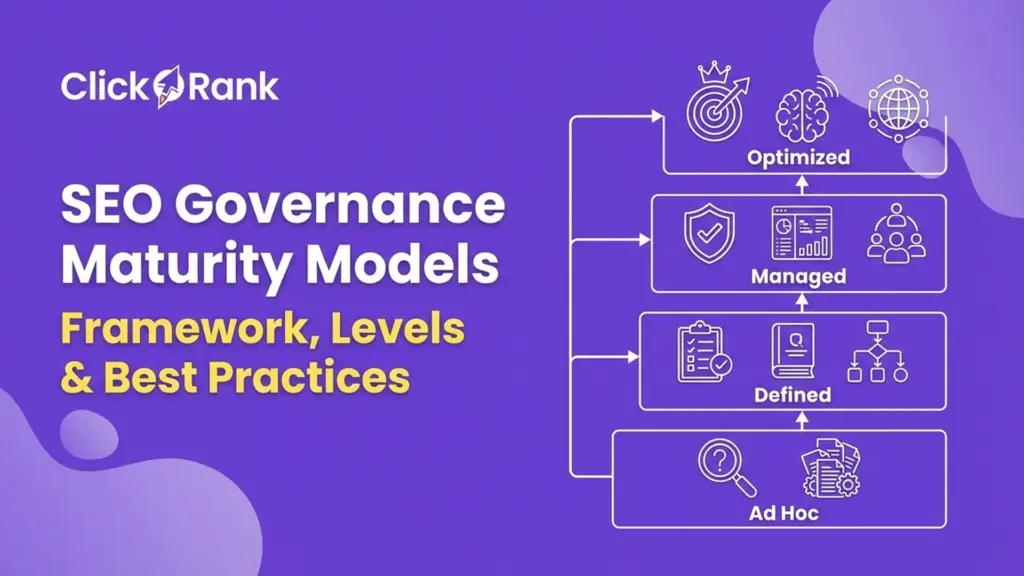
What Is an SEO Maturity Framework?
An SEO maturity framework is a structured model that evaluates how advanced and scalable your SEO process is. It helps organizations understand where they stand and what must improve inside their SEO framework. Instead of guessing capability levels, maturity stages provide clarity.
As SEO becomes more complex, teams need structured growth models. A defined SEO workflow evolves over time from basic optimization to predictive, AI-driven systems. The maturity framework outlines this progression clearly.
When included in your SEO roadmap, maturity assessment supports smarter investment decisions. It ensures your SEO strategy model evolves strategically instead of randomly.
What are the stages of SEO maturity?
SEO maturity progresses through foundational, growth, scalable, and predictive stages. Each stage reflects increasing structure, automation, and strategic alignment inside the SEO framework.
Below are the key stages within a modern SEO process.
Foundational stage
The foundational stage focuses on basic technical health and initial content optimization. Organizations at this level often lack a documented SEO workflow and rely on reactive fixes.
Common characteristics include simple keyword targeting, limited reporting, and minimal forecasting. Governance structures are usually informal or undefined.
At this stage, the priority is building a structured SEO framework. Establishing clear processes, technical standards, and content guidelines forms the base of long-term scalability.
Growth stage
The growth stage introduces structured workflows and strategic planning. Teams begin using an SEO roadmap with defined priorities and measurable KPIs.
Keyword clustering, content calendars, and regular reporting become standard. Authority-building efforts are more intentional, and internal linking improves.
Here, the SEO strategy model moves from reactive to proactive. The SEO process becomes repeatable, though still limited in automation and predictive capability.
Scalable stage
The scalable stage integrates governance, forecasting, and cross-department coordination. Enterprise SEO frameworks typically operate at this level.
Documentation is strong, SOPs guide execution, and performance dashboards support data-driven decisions. Agile SEO workflows improve speed and collaboration.
At this stage, the SEO framework supports consistent growth across large websites or multiple regions. Risk management and testing processes are embedded.
Predictive & AI-driven stage
The predictive and AI-driven stage uses automation and advanced modeling to anticipate opportunities and risks. AI supports forecasting, content gap detection, and performance analysis.
Here, the SEO process becomes highly data-driven and adaptive. Teams rely on structured experimentation and predictive analytics.
However, even at this stage, human-in-the-loop oversight remains essential. The most advanced SEO strategy models combine automation with expert validation to sustain long-term authority.
How Can Organizations Assess Their SEO Maturity Level?
Organizations assess their SEO maturity level by auditing processes, governance, performance consistency, and scalability. A structured SEO framework should be evaluated across strategy, execution, measurement, and automation. If results depend on individuals instead of systems, maturity is still low.
A mature SEO process includes documented SOPs, forecasting models, cross-team collaboration, and testing frameworks. An immature SEO workflow lacks standardization and relies on reactive fixes.
By benchmarking capabilities inside your SEO roadmap, leaders can identify gaps. This clarity allows your SEO strategy model to evolve intentionally instead of randomly.
What benchmarks indicate readiness for advanced frameworks?
Readiness for advanced SEO frameworks is indicated by process stability, reliable reporting, and cross-functional alignment. If your SEO process is consistent and measurable, you may be ready to scale.
Key readiness benchmarks include:
- Documented SEO workflow
- Consistent monthly reporting
- Forecast-based planning
- Technical audit systems in place
- Cross-team SEO collaboration
- Established content governance
If these elements exist, your SEO framework can support automation and predictive modeling. Without them, advanced tools may create confusion rather than growth.
A strong foundation ensures your SEO strategy model can transition toward AI-driven or enterprise-level frameworks safely.
How do you create a roadmap for progression?
You create a progression roadmap by identifying capability gaps and setting structured improvement phases. A strong SEO framework evolves step by step rather than through sudden overhauls.
Start by auditing current processes:
- Evaluate documentation gaps.
- Identify workflow bottlenecks.
- Assess measurement accuracy.
- Review governance clarity.
Next, prioritize improvements inside your SEO roadmap. For example, implement SOPs before investing in AI tools. Strengthen forecasting before scaling authority campaigns.
This structured approach transforms your SEO process gradually. A disciplined SEO strategy model ensures maturity growth aligns with business goals.
Approve this section so I can continue.
How Does SEO Integrate with Other Marketing Channels?
SEO integrates with other marketing channels by sharing data, insights, and audience intent signals. A modern SEO framework does not operate in isolation. It supports and strengthens PPC, content marketing, email, and broader digital campaigns.
Search data reveals what users actively want. This makes your SEO process a powerful insight engine for other teams. When integrated correctly, the SEO workflow increases efficiency across channels.
Including cross-channel alignment inside your SEO roadmap ensures unified messaging and stronger ROI. A connected SEO strategy model creates compounding growth rather than siloed performance.
How does SEO support PPC and paid media?
SEO supports PPC by identifying high-converting keywords, reducing paid costs, and improving landing page quality. Inside a structured SEO framework, organic data strengthens paid strategy decisions.
For example:
- SEO keyword research reveals high-intent search terms.
- Organic performance data identifies strong messaging angles.
- Landing page optimization improves both paid and organic results.
SEO insights can reduce wasted ad spend by highlighting keywords that rank organically. Conversely, PPC data can test keyword viability before long-term SEO investment.
When integrated into your SEO workflow, collaboration with paid teams improves targeting precision and campaign efficiency.
How can SEO insights inform content marketing strategy?
SEO insights inform content marketing by revealing real search demand and user intent patterns. A data-driven SEO framework ensures content topics are based on measurable opportunity not guesswork.
Search data identifies:
- Frequently asked questions
- Emerging industry trends
- Content gaps competitors miss
- Topic clusters with ranking potential
A structured SEO process transforms these insights into editorial calendars. Your SEO roadmap then aligns content creation with measurable traffic potential.
This integration strengthens authority and engagement. When your SEO strategy model guides content planning, marketing efforts become both creative and performance-driven.
What is the role of SEO in omnichannel experiences?
SEO plays a central role in omnichannel experiences by connecting discovery, engagement, and conversion touchpoints. A mature SEO framework ensures organic visibility supports every stage of the customer journey.
Users often discover brands through search before interacting with social media, email, or paid ads. A structured SEO workflow ensures consistent messaging across these channels.
SEO also improves site architecture and content clarity, enhancing overall user experience. When integrated into your SEO roadmap, organic search becomes the foundation of digital presence.
A unified SEO strategy model strengthens brand visibility across touchpoints, creating seamless and consistent user journeys.
What Does a Complete SEO Framework Template Look Like?
A complete SEO framework template is a structured document that outlines strategy, workflows, governance, measurement, and risk controls in one place. It acts as the master blueprint for your entire SEO process. Instead of scattered documents, your SEO framework becomes centralized and actionable.
In modern organizations, clarity drives execution speed. A well-built SEO strategy model documents how research is done, how content is produced, how technical updates are approved, and how results are measured. This prevents confusion and misalignment.
When integrated into your SEO roadmap, a documented template ensures consistency across teams. It transforms your SEO workflow into a repeatable, scalable system rather than a collection of disconnected tasks.
What sections should a framework document include?
A strong SEO framework document should include strategy, workflow, governance, measurement, forecasting, and risk management sections. Each part supports a different layer of the SEO process.
Core sections typically include:
- Strategic Objectives: Business alignment and growth goals
- Keyword & Entity Mapping: Target themes and topical coverage
- SEO Workflow: Step-by-step execution model
- Content Standards & SOPs: Quality control rules
- Technical Guidelines: Site structure and optimization rules
- Measurement Framework: KPIs and reporting cadence
- Attribution & Forecasting: ROI modeling
- Risk Management Plan: Monitoring and mitigation systems
When these elements are documented clearly, your SEO strategy model becomes operational not theoretical. A complete SEO planning template ensures accountability and scalability inside your SEO roadmap.
How can teams customize frameworks for different industries?
Teams customize SEO frameworks by adapting strategy, compliance rules, and content depth to industry-specific requirements. While the SEO process structure remains similar, execution details vary significantly.
For example:
- E-commerce: Focus on product schema, category architecture, and conversion optimization.
- SaaS: Emphasize educational content, entity depth, and product-led SEO workflows.
- Healthcare or Finance: Integrate strict compliance governance and E-E-A-T reinforcement.
- Local businesses: Prioritize local entity signals and map visibility.
A flexible SEO framework allows industry customization without breaking the core SEO workflow. The SEO roadmap stays structured, but tactics align with market demands.
When your SEO strategy model adapts intelligently, scalability and relevance improve together.
A strong SEO framework transforms scattered efforts into a scalable, predictable SEO process. You’ve seen how structured workflows, governance systems, testing models, attribution frameworks, and AI integration create a future-ready SEO strategy model.
To recap:
- Define a repeatable SEO workflow
- Align strategy with entity and customer journey models
- Implement governance and risk management
- Measure performance using structured KPIs
- Scale responsibly with AI and human oversight
If you want to evaluate your current SEO roadmap, start with a structured audit. Streamline your Free site audit . Try it now!
What is an SEO framework?
An SEO framework is a structured approach that outlines strategies, tools, and processes to optimize a website for search engines. It helps businesses consistently apply best practices across technical SEO, content, and link building.
Why are SEO frameworks important?
SEO frameworks ensure consistency, scalability, and efficiency. They provide a roadmap for improving visibility, targeting long-tail keywords, and aligning with Google’s ranking factors.
How do SEO frameworks improve website rankings?
By organizing SEO tasks such as keyword research, content optimization, and technical audits frameworks make it easier to identify gaps and apply proven strategies that boost rankings and organic traffic.
What are the key components of an SEO framework?
Technical SEO: Site speed, mobile optimization, crawlability
On-Page SEO: Keyword targeting, meta tags, structured data
Content Strategy: High-quality, user-focused content
Off-Page SEO: Backlinks, digital PR, authority building
Analytics & Monitoring: Tracking KPIs and adjusting strategies
Can SEO frameworks help with voice search?
Yes. FAQs and structured content within SEO frameworks align with natural language queries, making websites more likely to appear in voice search results.
How do I choose the right SEO framework?
Select a framework based on your business goals, industry, and resources. For small businesses, lightweight frameworks focusing on local SEO may be best, while enterprises benefit from scalable frameworks with advanced analytics.